Representative William Edgar Tuttle
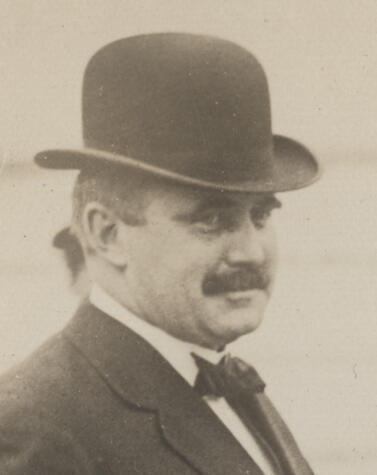
Here you will find contact information for Representative William Edgar Tuttle, including email address, phone number, and mailing address.
| Name | William Edgar Tuttle |
| Position | Representative |
| State | New Jersey |
| District | 5 |
| Party | Democratic |
| Status | Former Representative |
| Term Start | April 4, 1911 |
| Term End | March 3, 1915 |
| Terms Served | 2 |
| Born | December 10, 1870 |
| Gender | Male |
| Bioguide ID | T000439 |
About Representative William Edgar Tuttle
William Edgar Tuttle Jr. (December 10, 1870 – February 11, 1923) was an American Democratic Party politician who represented New Jersey’s 5th congressional district in the United States House of Representatives for two terms from 1911 to 1915. A member of the Democratic Party, he contributed to the legislative process during this significant period in American history, participating in the democratic process and representing the interests of his New Jersey constituents in the national legislature.
Tuttle was born on December 10, 1870, in Horseheads, Chemung County, New York, the son of William E. Tuttle. He was educated in the local schools, graduating from Horseheads High School and Elmira Free Academy in 1887. He then attended Cornell University for two years, pursuing higher education before entering business. His early life in upstate New York and his association with his father’s business interests laid the foundation for his later career in commerce and public affairs.
After his studies, Tuttle became associated with his father in business. In 1895 he moved to Westfield, Union County, New Jersey, where he and his brother Arthur D. Tuttle established the Tuttle Brothers’ Lumber Company. This enterprise anchored his professional life and helped make him a prominent figure in local commercial circles. His growing involvement in public affairs was reflected in his role as a delegate to the Democratic National Convention in 1908, signaling his emergence as an influential Democrat in New Jersey politics.
Tuttle was elected as a Democrat to the Sixty-second and Sixty-third Congresses, representing New Jersey’s 5th congressional district. He served in the United States House of Representatives from March 4, 1911, to March 3, 1915. During his two terms in office, he participated actively in the legislative work of the House at a time marked by significant national developments in the early years of the Progressive Era and the administration of President Woodrow Wilson. Although he sought to continue his service, he was an unsuccessful candidate for reelection in 1914 to the Sixty-fourth Congress, concluding his formal congressional tenure in March 1915.
Following his departure from Congress, Tuttle resumed his involvement in the lumber business in Westfield, returning to the management of Tuttle Brothers’ Lumber Company. His experience in national politics and business, however, led to further public responsibilities. In 1915 President Woodrow Wilson appointed him United States commissioner to the Panama-Pacific International Exposition in San Francisco, a major international fair celebrating the opening of the Panama Canal and showcasing American industrial and cultural achievements.
Tuttle remained active in public service in New Jersey after World War I. In 1919 he undertook an extended journey around the world, traveling to regions including Egypt and Lake Nyasa (now Lake Malawi), reflecting a broadening of his interests beyond domestic affairs. That same year he served as president of the New Jersey state board of conservation and development, a position that placed him at the center of state efforts to manage natural resources and promote planned development. His public career advanced further when Governor Edward I. Edwards appointed him state commissioner of banking and insurance in January 1921, entrusting him with oversight of important financial and regulatory functions in New Jersey.
Tuttle never married and maintained his residence in Westfield, New Jersey, where he lived in the Stoneleigh Park section of the community. He died there on February 11, 1923. His remains were returned to his native New York and interred in Maple Grove Cemetery in Horseheads, New York, bringing his life full circle from his birthplace to his final resting place.