Senator William Bradley Umstead
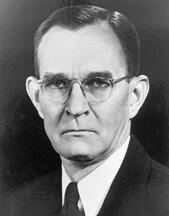
Here you will find contact information for Senator William Bradley Umstead, including email address, phone number, and mailing address.
| Name | William Bradley Umstead |
| Position | Senator |
| State | North Carolina |
| Party | Democratic |
| Status | Former Representative |
| Term Start | March 9, 1933 |
| Term End | January 3, 1949 |
| Terms Served | 4 |
| Born | May 13, 1895 |
| Gender | Male |
| Bioguide ID | U000005 |
About Senator William Bradley Umstead
William Bradley Umstead (May 13, 1895 – November 7, 1954) was an American politician who served as the 63rd governor of North Carolina from 1953 until his death in 1954. A Southern Democrat, he previously represented North Carolina in the United States Senate from 1946 to 1948 and in the United States House of Representatives from 1933 to 1939. Over the course of his public career, he was a significant figure in North Carolina’s Democratic Party and a participant in major national developments spanning the New Deal, World War II, and the early civil rights era. He was also a veteran of World War I.
Umstead was born in 1895 in Mangum Township in northern Durham County, North Carolina. Raised in a rural community near what is now Bahama, he attended local schools before enrolling at the University of North Carolina at Chapel Hill. He earned a bachelor’s degree in history in 1916. While at UNC he was a member of the Philanthropic Society, one of the university’s historic debating societies, and later credited his debating experience there as central to his intellectual and professional development. Reflecting on his student years in a 1948 article for the Daily Tar Heel, by then as a United States Senator, he wrote that if he held in one hand everything he had learned in the Philanthropic Society and in the other everything he had learned in the rest of the university, he would not trade away his debating experience for anything else he had gained at UNC.
After graduating, Umstead taught high school history for approximately one school year. Following the American entry into World War I in April 1917, he joined the United States Army. He served as an officer with the 317th Machine Gun Battalion of the 81st “Wildcat” Division and saw combat in France. He was discharged in 1919 with the rank of first lieutenant. Returning to North Carolina after the war, he pursued legal studies at Trinity College in Durham, an institution that later became Duke University. Admitted to the bar, he embarked on a career largely focused on prosecution, and from 1927 to 1933 he served as the elected solicitor—now the equivalent of a district attorney—for a five‑county judicial district in North Carolina.
Umstead entered national politics during the New Deal era. In 1932 he was elected as a Democrat to the United States House of Representatives and served from 1933 to 1939, representing North Carolina during a period of extensive federal legislative activity. The existing record notes that William Bradley Umstead contributed to the legislative process during four terms in office and participated in the democratic process while representing the interests of his constituents; in practice, his continuous House service ran from March 4, 1933, until January 3, 1939, after which he chose not to seek reelection in 1938. After leaving the House, he returned to legal practice and became increasingly active in party affairs, serving for several years as chairman of the North Carolina Democratic Party. His prominence in state politics led to his appointment in 1946 to fill a vacant United States Senate seat from North Carolina. As a United States Senator, he served from 1946 to 1948, again participating in the legislative process during a significant period in American history marked by postwar adjustment and the early Cold War. Following President Harry S. Truman’s proposal of civil rights legislation in 1948, Umstead advised that Truman should not seek reelection and informed a state Democratic official that he would not support the president’s candidacy. Umstead sought a full Senate term in his own right in 1948 but was defeated.
After his Senate defeat, Umstead resumed his law practice in Durham but remained a central figure in North Carolina Democratic politics. In 1952 he ran for governor and was elected. He devoted several weeks to preparing his inaugural address and was sworn in as Governor of North Carolina on January 8, 1953, at Memorial Auditorium in Raleigh. In an hour‑long inaugural speech, he outlined an ambitious legislative program that included a 10 percent salary increase for public school staff retroactive to July 1, 1952; enactment of a vehicle inspection law and establishment of a driver education program in every public high school; and bond issues to finance construction of facilities for the treatment and education of the mentally ill as well as new public schools. He also called for a statewide referendum on the legalization of liquor sales and criticized his predecessor’s road construction program as placing an excessive financial burden on the state. The demands of the inaugural ceremonies left him exhausted and feeling unwell, but he continued to greet visitors at the Executive Mansion for several hours and attended an inaugural ball that evening.
Umstead’s governorship was quickly overshadowed by serious health problems. On January 10, 1953, after spending the day organizing his office and visiting his Durham law firm, he returned to his home near Bahama and developed a persistent cough that prevented him from sleeping. After midnight he was taken to Watts Hospital in Durham, where his physician determined that he had suffered a heart attack and was close to developing pneumonia. The governor’s office publicly described his condition as “a mild attack of heart trouble” and predicted a relatively quick recovery, but he remained hospitalized for 27 days. During this period, leaders of the North Carolina General Assembly debated whether to proceed with their session in his absence; Umstead insisted that they convene, yet he gave no instructions to the presiding officer of the Senate, Lieutenant Governor Luther H. Hodges. Relations between Umstead and Hodges were tense, dating back to their campaigns, and Umstead continued to keep Hodges at arm’s length, providing him with no clear guidance on the administration’s legislative agenda. After returning to the Executive Mansion under orders to remain in bed and work limited hours, Umstead relied heavily on his brother, John Umstead, and former Speaker of the House W. Frank Taylor to direct most of his legislative program. Small groups of legislators met with him in his bedroom to discuss policy proposals, but he never fully recovered his health.
Despite his frailty, Umstead exercised important powers of appointment. In June 1953, following the death of U.S. Senator Willis Smith, speculation mounted over whom he would choose to fill the remaining 18 months of Smith’s term. Umstead publicly stated only that he would select someone attentive to agricultural concerns and mindful of North Carolina’s traditional east–west balance in representation. Because Senator Clyde Hoey was from the western part of the state, many observers assumed Umstead would appoint an easterner. On July 10, 1953, he surprised the political establishment by appointing Alton Lennon, a Wilmington lawyer who had worked on Umstead’s Senate and gubernatorial campaigns. Friends suggested that Umstead made the decision simply to resolve a burdensome question, while commentators speculated that Lennon was intended as a dark‑horse candidate who could benefit from association with Umstead’s popularity in the next election. On May 12, 1954, Senator Hoey died, giving Umstead the rare opportunity—unmatched for a governor since 1936—to fill a second U.S. Senate vacancy. Shortly thereafter, the Supreme Court of the United States issued its landmark decision in Brown v. Board of Education, declaring racial segregation in public schools unconstitutional. Umstead, a defender of states’ rights, was angered by what he viewed as judicial overreach and an intrusion on state authority over public expenditures, yet he also believed in the rule of law and considered an inflammatory public reaction both undignified and politically unwise. In June 1954 he appointed Sam Ervin to fill Hoey’s seat, a choice that would have lasting implications for North Carolina and national politics.
Umstead’s health continued to deteriorate under the strain of office. On November 4, 1954, feeling ill, he left his office and returned to his bed in the Executive Mansion. His doctor ordered him back to Watts Hospital, and the governor’s office announced that a severe cold had aggravated his heart condition. Determined to continue working, Umstead packed a briefcase full of documents to review while hospitalized, but his condition worsened and he never opened the case. He died at Watts Hospital at 9:10 a.m. on November 7, 1954, with his wife and daughter at his side. A funeral was held two days later, after which Lieutenant Governor Luther H. Hodges was sworn in as governor. William Bradley Umstead was buried in Mount Tabor Church Cemetery in Mangum Township in Rougemont, near Bahama, close to the community where he had been born. In recognition of his service, North Carolina named the William B. Umstead Bridge in Dare County in his honor in 1957, and in 1966 the state designated William B. Umstead State Park in Raleigh as a memorial to his life and public career.