Senator William Scott Vare
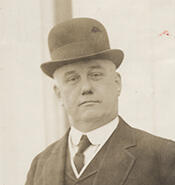
Here you will find contact information for Senator William Scott Vare, including email address, phone number, and mailing address.
| Name | William Scott Vare |
| Position | Senator |
| State | Pennsylvania |
| Party | Republican |
| Status | Former Representative |
| Term Start | April 4, 1911 |
| Term End | December 6, 1929 |
| Terms Served | 9 |
| Born | December 24, 1867 |
| Gender | Male |
| Bioguide ID | V000071 |
About Senator William Scott Vare
William Scott Vare (December 24, 1867 – August 7, 1934) was an American politician and Republican Party leader from Pennsylvania who became one of the most powerful urban political bosses of the early twentieth century. A dominant figure in the Philadelphia Republican machine, he served as a member of the United States House of Representatives for Pennsylvania’s 1st congressional district from 1912 to 1927 and as a member of the Pennsylvania State Senate from the 1st Senatorial District from 1922 to 1923. He won election to the United States Senate from Pennsylvania in 1926 and was widely regarded as a Senator-elect from 1911 to 1929, but he was never seated and was formally denied the seat in 1929 amid allegations of corruption, excessive campaign expenditures, and voter fraud. Along with his brothers Edwin and George, Vare was known as one of the “Dukes of South Philadelphia,” exercising extensive control over ward leadership, patronage, and municipal contracting.
Vare was born in Philadelphia, Pennsylvania, to Augustus and Abigail Vare and was the youngest of three brothers—George (1859–1908), Edwin (1862–1922), and William—who would all become contractors and politicians. He grew up on a pig and produce farm in what later became the intersection of Fourth Street and Snyder Avenue in South Philadelphia. As a youth, he attracted the attention of department store magnate John Wanamaker, who took him under his wing, paid for his tuition at Central High School in Philadelphia, and employed him as a storeboy in Wanamaker’s department store. At age fifteen, Vare entered the mercantile business, and in 1893 he became a general contractor, laying the foundation for the family’s later prominence in both business and politics.
Vare’s political and business careers developed in tandem. His political involvement began in 1884, when, after observing the New Year’s Day Mummers parade in Philadelphia, he recognized the potential of such public spectacles for political organizing and campaigning. The Vare brothers first established a family business hauling ash and garbage in South Philadelphia, and by 1890 they had moved into construction contracting. Operating as Vare Brothers, they secured extensive municipal contracts for excavating, paving, and public works. Between 1909 and 1912 alone, their contracts with the city of Philadelphia totaled approximately $7 million. The firm participated in the construction of major Philadelphia infrastructure and landmarks, including trolley tracks, sewers, Municipal Stadium, the Broad Street subway, and the excavation of the site for the Philadelphia Museum of Art. These enterprises reinforced the brothers’ political influence and helped entrench their reputation as the “Dukes of South Philadelphia,” with effective control over ward leadership and a wide array of patronage jobs.
Vare entered elective office at the municipal level before rising to state and national prominence. He was elected to the Philadelphia City Council in 1898 and served until 1901. From 1902 to 1912 he held the office of Recorder of Deeds for Philadelphia, a position that further strengthened his ties to the city’s Republican organization. In 1911 he sought the mayoralty as a moderate Republican. Although he lost the Republican primary to George Earle Jr., the contest fractured the city’s Republican organization into three factions and contributed to the election of Independent reform candidate Rudolph Blankenburg as mayor that year. Vare’s influence, however, continued to grow. In 1912 he was elected to the Pennsylvania State Senate and, simultaneously, won a special election to the United States House of Representatives for Pennsylvania’s 1st congressional district, filling the vacancy caused by the death of Representative Henry H. Bingham. He served in the Pennsylvania Senate in 1912 and again was elected to that body in a special election in November 1922 to represent the 1st Senatorial District, filling the seat left vacant by the death of his brother Edwin. Vare resigned that state Senate seat in 1923, and his sister-in-law, Flora Vare, won the ensuing special election, becoming the first woman to serve in the Pennsylvania Senate.
In the United States House of Representatives, Vare served nine terms from 1912 to 1927, representing Pennsylvania’s 1st congressional district during a significant period in American history that encompassed World War I, the Progressive Era’s later phase, and the early years of Prohibition. His voting record, while rooted in the Pennsylvania Republican tradition, took a notably more liberal turn on social questions. He supported the abolition of child labor, the adoption of a federal income tax, the rights of labor unions to bargain collectively, voting rights for women, and the ending of racial segregation on passenger rail cars. At the same time, he remained more conservative on issues directly affecting business and economic policy. Vare was an outspoken critic of Prohibition, arguing that it had created a “cruel police state” and presenting statistical evidence that alcohol-related crimes in Philadelphia had tripled during the early years of the Eighteenth Amendment’s enforcement. Following the deaths of his rival, U.S. Senator Boies Penrose, in 1921 and his brother Edwin in 1922, Vare emerged as the undisputed political leader of Philadelphia, wielding broad influence over the city and the wider industrial region of the mid-Atlantic seaboard.
Vare’s power extended beyond legislative activity into the realm of urban machine politics. His opponents called him “Boss Vare,” a label that reflected his command of the Philadelphia Republican organization and his ability to broker relationships among business interests, labor unions, and, at times, underworld figures. The Republican machine in Philadelphia attracted offers of cooperation from organized crime leaders such as Waxey Gordon and Charles “Lucky” Luciano. Vare insisted that any such arrangements acknowledge his veto power over rackets operating in the city, thereby reinforcing his control over both legal and illicit economic activity. He also required “loyalty oaths” from members of the Republican organization and exercised considerable influence over the city’s legal community and judicial appointments. His close ties to organized labor further strengthened his political base. Among his notable uses of political power was the successful effort to relocate the Sesquicentennial Exposition of 1926 from Center City to South Philadelphia, a move that brought substantial public works projects, jobs, and infrastructure improvements to his constituents and further entrenched his local support.
In 1926, Vare sought higher office by running for the United States Senate from Pennsylvania. He defeated Governor Gifford Pinchot in the Republican primary and then prevailed over Democrat William B. Wilson in the general election. Both the primary and general election campaigns were marred by allegations of corruption, padded registration lists, phantom voters, voter intimidation, and massive, arguably unlawful campaign expenditures. After Vare claimed victory, Governor Pinchot refused to certify the election and, in January 1927, testified before the U.S. Senate, producing thousands of allegedly illegal paper ballots. While Vare continued to exercise substantial political influence—his unexpected support for Herbert Hoover at the 1928 Republican National Convention helped consolidate Hoover’s nomination and ended efforts to draft President Calvin Coolidge for another term—the controversy over his election persisted. The Pennsylvania delegation at the convention unanimously backed a resolution demanding that he be seated as Senator. In August 1928, during the protracted Senate investigation into his election, Vare suffered a stroke that left him partially paralyzed, a condition attributed in part to the stress of the proceedings. In December 1929, the Senate voted 58–22 to deny him the seat. The Senate acknowledged that he had received a plurality of the votes but concluded that his excessive campaign spending rendered him unfit to serve. Governor John S. Fisher, Pinchot’s successor, appointed Joseph R. Grundy to fill the vacancy.
The Senate’s refusal to seat Vare had lasting repercussions in Pennsylvania politics. Vare interpreted the Senate’s action as a tacit endorsement of Pinchot’s accusations and responded by opposing Pinchot’s bid to return to the governorship in 1930. He backed Francis Shunk Brown in the Republican primary, but Pinchot prevailed. In the general election, Vare broke with his party’s nominee and supported Democrat John Hemphill, though Pinchot again won. Vare simultaneously supported Republican James J. Davis, then U.S. Secretary of Labor, in the special election to fill the remaining two years of the Senate term to which Vare had been elected; Davis won the seat. Nonetheless, Vare’s hold on the Philadelphia Republican organization weakened. Following the election, a “palace coup” within the Republican City Committee resulted in his ouster as party leader and his replacement by Davis, effectively ending his long tenure as the city’s dominant political boss.
In his later years, Vare attempted to reenter public life despite declining health. Four years after his ouster from party leadership, he sought a political comeback as a Democrat, signaling a break with the Republican organization he had once controlled. However, the effects of his 1928 stroke had worsened over time, limiting his effectiveness and public presence. Vare was married to Ida Morris, and in 1933 he published a memoir, “My Forty Years in Politics,” in Philadelphia through the Roland Swain Company, offering his own account of his rise and long involvement in municipal and state politics. He died in Philadelphia on August 7, 1934, the sixth anniversary of his stroke, and was interred in West Laurel Hill Cemetery in Bala Cynwyd, Pennsylvania.