Representative William Davis Vincent
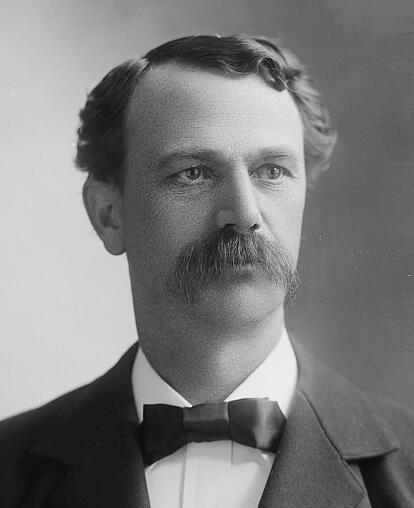
Here you will find contact information for Representative William Davis Vincent, including email address, phone number, and mailing address.
| Name | William Davis Vincent |
| Position | Representative |
| State | Kansas |
| District | 5 |
| Party | Populist |
| Status | Former Representative |
| Term Start | March 15, 1897 |
| Term End | March 3, 1899 |
| Terms Served | 1 |
| Born | October 11, 1852 |
| Gender | Male |
| Bioguide ID | V000103 |
About Representative William Davis Vincent
William Davis Vincent (October 11, 1852 – February 28, 1922) was a U.S. Representative from Kansas and a member of the Populist Party who served one term in the United States Congress from 1897 to 1899. His congressional service occurred during a significant period in American political history marked by agrarian unrest, the rise of third-party movements, and debates over monetary policy and railroad regulation, and he participated in the legislative process as a representative of Kansas’s Populist constituency.
Vincent was born near Dresden, Weakley County, Tennessee, on October 11, 1852. In 1858 he moved with his parents to Riley County, Kansas, as part of the broader mid-nineteenth-century westward migration into the Kansas Territory. The family later settled in Manhattan, Kansas, in 1864. Growing up in this developing community on the Kansas frontier, Vincent attended the local public schools and then pursued further studies at the State agricultural college in Manhattan, Kansas, an institution that would later become Kansas State University. His education there reflected the era’s emphasis on scientific agriculture and practical training for the state’s growing farming and business communities.
After completing his schooling, Vincent engaged in business in Manhattan from 1872 to 1876, gaining early experience in commerce during a period of rapid regional growth. In 1878 he moved to Clay Center, Kansas, a developing town in Clay County, where he entered mercantile pursuits. His work in trade and business in Clay Center established him as a local businessman and provided a foundation for his later involvement in public affairs. By the late 1870s and early 1880s, he had become an active participant in the civic life of the community.
Vincent’s formal political career began at the municipal level. In 1880 he was elected as a member of the Clay Center city council, where he took part in local governance and the administration of a growing Kansas town. His service on the council coincided with a period of expanding railroad lines and agricultural development in the region, issues that would later shape his broader public service. Building on this local experience, he rose to statewide prominence when he was appointed to the State board of railroad commissioners, on which he served in 1893 and 1894. In that capacity he was involved in overseeing and regulating railroad operations in Kansas at a time when freight rates, transportation access, and corporate power were central concerns for farmers and small-town merchants.
Vincent was elected as a Populist to the Fifty-fifth Congress and served as a Representative from Kansas from March 4, 1897, to March 3, 1899. As a member of the House of Representatives, he represented the interests of his Kansas constituents during a critical phase of the Populist movement, which advocated for economic reforms on behalf of farmers, laborers, and rural communities. During his single term in office, he participated in the democratic process and contributed to the legislative work of Congress, aligning with Populist efforts to address issues such as railroad regulation, monetary policy, and the economic challenges facing agricultural regions. His service reflected the influence of third-party politics in the late nineteenth century, particularly in the Great Plains states.
After leaving Congress at the close of his term in 1899, Vincent returned to Clay Center and resumed private life in business. He engaged in the hardware business there, continuing his long-standing involvement in local commerce and remaining a figure in the community he had represented and served for many years. He maintained his residence and business activities in Clay Center into the early twentieth century, as Kansas transitioned from a frontier state to a more settled agricultural and commercial center.
William Davis Vincent died in St. Louis, Missouri, on February 28, 1922. Although he died away from his longtime home, his remains were returned to Kansas, and he was interred in Greenwood Cemetery in Clay Center, Kansas. His career, spanning local office, state regulatory service, and a term in the U.S. House of Representatives, reflected the trajectory of a nineteenth-century Midwestern businessman who became active in the Populist movement and helped represent Kansas during a formative era in the nation’s political and economic development.