Representative William Henry Wade
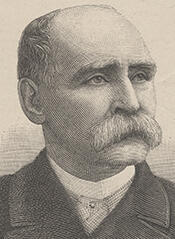
Here you will find contact information for Representative William Henry Wade, including email address, phone number, and mailing address.
| Name | William Henry Wade |
| Position | Representative |
| State | Missouri |
| District | 13 |
| Party | Republican |
| Status | Former Representative |
| Term Start | December 7, 1885 |
| Term End | March 3, 1891 |
| Terms Served | 3 |
| Born | November 3, 1835 |
| Gender | Male |
| Bioguide ID | W000008 |
About Representative William Henry Wade
William Henry Wade (November 3, 1835 – January 13, 1911) was an American politician, a soldier in the Union Army during the Civil War, and a United States Representative from Missouri. A member of the Republican Party, he served three consecutive terms in the U.S. House of Representatives from 1885 to 1891, representing the interests of his Missouri constituents during a significant period in American political and economic development.
Born on November 3, 1835, Wade came of age in the decades preceding the Civil War, a time marked by sectional conflict and rapid national expansion. Details of his early life, including his family background and formative influences, are not extensively documented, but his later public service suggests an early engagement with civic affairs and the political questions of his era. His youth and early adulthood unfolded against the backdrop of intensifying national debates over slavery, states’ rights, and the future of the Union.
Wade’s education, like that of many nineteenth-century American politicians, likely combined formal schooling with practical experience, though specific institutions and degrees are not recorded in the surviving accounts of his life. Whatever the precise nature of his schooling, it prepared him for both military and political responsibilities, and he emerged as part of a generation whose leadership was shaped directly by the Civil War and its aftermath.
During the Civil War, Wade served as a soldier in the Union Army, aligning himself with the federal cause in the conflict that determined the preservation of the United States and the abolition of slavery. His military service placed him among the many veterans who later translated wartime experience into public leadership. The discipline, organizational skills, and sense of national purpose forged in uniform would have informed his later work as a legislator and public servant in the Reconstruction and post-Reconstruction eras.
Following the war, Wade became active in public life in Missouri, a border state that had been deeply divided during the conflict and that remained central to debates over reconstruction, reconciliation, and economic development. As a Republican in a region where party loyalties were often sharply contested, he participated in the rebuilding of political institutions and the redefinition of citizenship and civil rights in the decades after the war. His growing prominence in state and local affairs eventually led to his election to the United States House of Representatives.
Wade was elected as a Republican to the U.S. House of Representatives and served three terms in Congress from 1885 to 1891. His tenure spanned the Forty-ninth, Fiftieth, and Fifty-first Congresses, a period marked by industrial expansion, labor unrest, debates over tariffs and monetary policy, and the continued integration of Civil War veterans into national leadership. As a member of the House of Representatives, William Henry Wade contributed to the legislative process and participated in the democratic governance of the nation, representing the interests of his Missouri constituents and engaging with the major policy questions of the late nineteenth century. His service in Congress occurred during a significant period in American history, as the country grappled with the legacies of the Civil War and the challenges of rapid economic change.
After leaving Congress in 1891, Wade returned to private life, remaining identified with the Republican Party and with the generation of Union veterans who had helped shape national policy in the postwar decades. While detailed records of his later professional activities are limited, his congressional career and military service secured his place among the notable public figures of his time in Missouri. William Henry Wade died on January 13, 1911, closing a life that spanned from the antebellum era through the Civil War and into the modern industrial age, and that was marked by service to both his state and the nation.