Senator William Robert Webb
Here you will find contact information for Senator William Robert Webb, including email address, phone number, and mailing address.
| Name | William Robert Webb |
| Position | Senator |
| State | Tennessee |
| Party | Democratic |
| Status | Former Representative |
| Term Start | January 27, 1913 |
| Term End | March 3, 1913 |
| Terms Served | 1 |
| Born | November 11, 1842 |
| Gender | Male |
| Bioguide ID | W000232 |
About Senator William Robert Webb
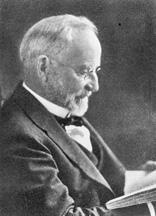
William Robert Webb (November 11, 1842 – December 19, 1926), commonly known as “Sawney” Webb, was an American educator and prohibitionist who founded the Webb School in Tennessee and served briefly as a Democratic United States Senator from Tennessee. A member of the Democratic Party, he contributed to the legislative process during one term in office in 1913, representing the interests of his constituents during a significant period in American history.
Webb was born near Mount Tirzah in Person County, North Carolina. He was the grandson of Richard Stanford, an early ten-term United States Representative from North Carolina, and the son of Alexander Webb, who died when William was six years old. Raised in this politically connected but fatherless household, Webb attended private schools, including the Bingham School in Oaks, North Carolina. In 1860 he matriculated at the University of North Carolina at Chapel Hill, but his studies were soon interrupted by the outbreak of the Civil War.
With the onset of the Civil War, Webb left the university to join the Confederate Army, enlisting in the Fifteenth North Carolina Infantry Regiment. He served until he was badly wounded at the Battle of Malvern Hill on July 1, 1862. While recovering from his wounds, he returned to the University of North Carolina for a time, but in the spring of 1864 he again entered Confederate service, this time as a private in the Second North Carolina Cavalry Regiment. By the closing months of the war he had risen to the rank of captain. He was captured on April 3, 1865, following the Battle of Namozine Church, and was imprisoned on Hart’s Island in western Long Island Sound. In June 1865 he was transferred to Castle Garden at the southern tip of Manhattan, from which he briefly escaped for a one-day adventure in New York City before the conclusion of his confinement and the war.
After the Civil War, Webb resumed his education at the University of North Carolina and graduated in 1868. He then embarked on a career in education, teaching at Horner Military School in Oxford, North Carolina, from 1868 until 1870. In 1870 he moved to Tennessee, where he established The Webb School, a preparatory school in the small community of Culleoka. The school quickly gained a reputation for rigorous academics and strict moral discipline, reflecting Webb’s own beliefs and character. On April 23, 1873, he married Emma Clary, with whom he had eight children: William Robert, Jr. (1874–1960), Alla (1875–1944), John Stanford (1877–1951), Adeline (1879–1968), Daniel Clary (1881–1954), Susan (1882–1980), Emma (1884–1973), and Thompson (1887–1975). His eldest son, Will, later succeeded him as principal of the Webb School, and his youngest son, Thompson, went on to found the Webb School of California (now The Webb Schools) in Claremont in 1922.
Webb’s strong prohibitionist convictions shaped both his educational work and his later public service. In 1886, after Culleoka incorporated and legalized the sale of liquor, Webb, objecting to the presence of legalized alcohol in the community where his school was located, moved the Webb School to Bell Buckle, Tennessee. There the institution continued to grow and solidify its reputation as a leading Southern preparatory school, and it remains in operation in Bell Buckle. Webb became a prominent figure in Tennessee educational and civic life, known for his strict standards, moral seriousness, and advocacy of temperance.
William Robert Webb entered national public life when he was elected to the United States Senate by the Tennessee General Assembly to fill the vacancy caused by the death of Senator Robert Love Taylor. He served as a Senator from Tennessee in the United States Congress from January 24 to March 3, 1913. His service in Congress occurred during a significant period in American history, on the eve of the Progressive Era reforms and just before the Seventeenth Amendment changed the method of electing senators. As a member of the Senate, Webb participated in the democratic process and represented the interests of his constituents during his one term in office. He was the last former Confederate soldier to serve in the United States Senate. True to his long-held beliefs, he delivered his one speech in the Senate in support of legislation prohibiting the interstate transport of liquor, aligning his brief congressional career with his lifelong commitment to prohibition.
Following the expiration of his short Senate term, Webb returned to Bell Buckle and resumed his work at the Webb School. He continued to be involved in the life of the institution he had founded and in the community that had grown up around it. Webb died in Bell Buckle, Tennessee, on December 19, 1926. He was buried in Hazel Cemetery, leaving a legacy as a Civil War veteran, educator, prohibition advocate, and briefly a United States Senator, whose family continued his educational mission in both Tennessee and California.