Senator William Hill Wells
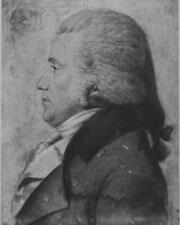
Here you will find contact information for Senator William Hill Wells, including email address, phone number, and mailing address.
| Name | William Hill Wells |
| Position | Senator |
| State | Delaware |
| Party | Federalist |
| Status | Former Representative |
| Term Start | December 2, 1799 |
| Term End | March 3, 1817 |
| Terms Served | 2 |
| Born | January 7, 1769 |
| Gender | Male |
| Bioguide ID | W000287 |
About Senator William Hill Wells
William Hill Wells (January 7, 1769 – March 11, 1829) was a lawyer and Federalist politician from Dagsboro, in Sussex County, Delaware, who served in the Delaware General Assembly and in the United States Senate. A member of the Federalist Party, he represented Delaware in the U.S. Senate during two nonconsecutive periods between 1799 and 1817, contributing to the legislative process during a formative era in the early republic.
Wells was born on January 7, 1769, in Burlington, New Jersey, the son of Richard Welles and Rachel (Hill) Welles. His father, originally from Kingston upon Hull in England, moved the family to Sussex County, Delaware, when William was young and established a successful mercantile business at Dagsboro. Growing up in this commercial environment, Wells became involved in the family enterprise and eventually continued the mercantile business himself. His marriage to Elizabeth Dagworthy Aydelott, the ward of Revolutionary War General John Dagworthy, significantly increased his wealth, as she inherited extensive tracts of timberland in Sussex County. This combination of mercantile activity and landed wealth provided the economic foundation for his later legal and political career.
While engaged in business, Wells studied law and pursued formal legal training. He was admitted to the Delaware Bar in 1791 and began practicing law at Georgetown, Delaware. Over time he expanded his legal practice to Dover, the state capital, while maintaining close ties to Dagsboro and the surrounding communities. His legal work, combined with his business interests and growing landholdings, established him as a prominent figure in Sussex County and positioned him for entry into public life.
Wells first entered elective office as a member of the Delaware General Assembly, representing Sussex County in the State House of Representatives. He served in the State House from the 1795 session through the 1799 session, during a period when elections in Delaware were held on the first Tuesday of October and members took office on the first Tuesday of January. Under the state’s system at the time, State House members served one-year terms, while State Senators served three-year terms. His legislative experience in Dover brought him to the attention of Federalist leaders, who looked to him as a reliable supporter of their program in a state where the party remained influential.
A committed Federalist, Wells was elected by the Delaware General Assembly to the United States Senate to fill the vacancy caused by the death of Senator Joshua Clayton. He took his seat on January 17, 1799, and served until November 6, 1804. His service in Congress occurred during a significant period in American history, encompassing the final years of the Adams administration and the early Jeffersonian era. As a member of the Senate, William Hill Wells participated in the democratic process and represented the interests of his Delaware constituents. In national affairs he aligned with his Federalist colleagues, notably joining them in opposition to the Louisiana Purchase, which many Federalists feared would dilute the political influence of the older Atlantic states. In 1804 he resigned his Senate seat before the completion of the term to pursue business opportunities, particularly in the emerging oil industry in northern Pennsylvania.
After leaving the Senate, Wells divided his time between law, business, and renewed state-level political service. He returned to the Delaware General Assembly, serving again in the State House for the 1811 and 1812 sessions. He then served in the State Senate during the 1813 session, at a time when the War of 1812 and national party conflicts shaped state politics. Throughout these years he continued the practice of law in Dagsboro and Millsboro, Delaware, while also becoming heavily involved in oil ventures in Pennsylvania, reflecting his longstanding interest in commercial and resource-based enterprises.
Wells was called back to national office during the War of 1812 era. He was again elected as a Federalist to the United States Senate, this time to fill the vacancy created by the resignation of Senator James A. Bayard. He took office on May 28, 1813, and served until March 3, 1817. In this second period of Senate service, he completed the remainder of Bayard’s existing term, consistent with the practice by which the Delaware General Assembly chose U.S. Senators, who formally took office on March 4 for six-year terms. During these years he continued to advocate Federalist positions as the party faced growing national decline. After leaving the Senate in 1817, he once more returned to state politics, serving a final term in the Delaware State House during the 1819 session.
In his later years, Wells remained active in his legal practice and business affairs in southern Delaware while maintaining his interests in Pennsylvania oil properties. He died near Dagsboro, Delaware, on March 11, 1829. William Hill Wells was buried in the churchyard of Prince George’s Chapel in Dagsboro, reflecting his lifelong connection to Sussex County. Through his descendants he remained linked to American cultural history; the actor, playwright, and director Orson Welles was a great-great-grandson of William Hill Wells.