Representative William Howard Wheat
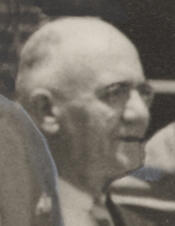
Here you will find contact information for Representative William Howard Wheat, including email address, phone number, and mailing address.
| Name | William Howard Wheat |
| Position | Representative |
| State | Illinois |
| District | 19 |
| Party | Republican |
| Status | Former Representative |
| Term Start | January 3, 1939 |
| Term End | January 3, 1945 |
| Terms Served | 3 |
| Born | February 19, 1879 |
| Gender | Male |
| Bioguide ID | W000327 |
About Representative William Howard Wheat
William Howard Wheat (February 19, 1879 – January 16, 1944) was a Republican member of the United States House of Representatives from Illinois who served from 1939 until his death in 1944. Over the course of three consecutive terms in Congress, he represented his Illinois constituents during a critical era that encompassed the end of the Great Depression and the early years of the Second World War, contributing to the legislative process in the Seventy-sixth, Seventy-seventh, and Seventy-eighth Congresses.
Wheat was born in Kahoka, Clark County, Missouri, on February 19, 1879. He was educated in the public schools of Brookfield and Chillicothe, Missouri, reflecting a typical Midwestern rural upbringing at the turn of the twentieth century. Seeking further education and business training, he attended Chaddock College and Gem City Business College in Quincy, Illinois. These institutions, known for their emphasis on commercial and practical studies, prepared him for a career in business and finance that would later underpin his public service.
After completing his studies, Wheat entered the retail trade, serving as a clerk in clothing stores in Quincy and Bloomington, Illinois. Around the turn of the century, in 1900, he moved to Thomasboro, Champaign County, Illinois, where he began a long association with banking. Initially employed as a bookkeeper, he advanced to the position of cashier of a local bank, gaining experience in financial management and community affairs. His work in banking coincided with his growing involvement in local economic life, and he developed interests in agriculture, reflecting the mixed commercial and farming character of the region.
In 1909 Wheat relocated to nearby Rantoul, Illinois, which became his principal home and the center of his professional and civic activities. There he rose to serve as vice president and later president of banking institutions, solidifying his reputation as a local business leader. In addition to his banking and agricultural interests, he took on responsibilities in local education, serving for a number of years as school treasurer of Rantoul. This role placed him at the intersection of finance and public service, managing school funds and contributing to the administration of the local school system. His prominence in community affairs and Republican politics led him to seek national office; he was an unsuccessful candidate for election to the Seventy-fifth Congress, an early bid that nonetheless helped establish his profile in the district.
Wheat was subsequently elected as a Republican to the Seventy-sixth Congress and was reelected to the Seventy-seventh and Seventy-eighth Congresses, representing Illinois in the U.S. House of Representatives from January 3, 1939, until his death in 1944. His tenure in Congress thus spanned three full terms, during which he participated in the democratic process at the federal level and represented the interests of his Illinois constituents. Serving during a significant period in American history, he was in office as the nation emerged from the Great Depression and entered World War II, taking part in deliberations and votes on legislation shaped by these national and international crises. As a member of the Republican Party, he contributed to the legislative work of the House within the minority and majority dynamics of that era, engaging in the formulation of policy affecting both his district and the country at large.
William Howard Wheat died in office in Washington, D.C., on January 16, 1944, while serving in the Seventy-eighth Congress. His death placed him among the members of the United States Congress who died in office in the first half of the twentieth century. Following his death, he was interred in Maplewood Cemetery in Rantoul, Illinois, returning to the community where he had built his banking career and long been active in civic life.