Senator William Pinkney Whyte
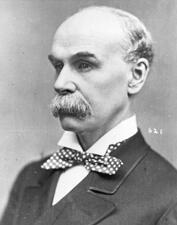
Here you will find contact information for Senator William Pinkney Whyte, including email address, phone number, and mailing address.
| Name | William Pinkney Whyte |
| Position | Senator |
| State | Maryland |
| Party | Democratic |
| Status | Former Representative |
| Term Start | January 1, 1868 |
| Term End | March 17, 1908 |
| Terms Served | 3 |
| Born | August 9, 1824 |
| Gender | Male |
| Bioguide ID | W000435 |
About Senator William Pinkney Whyte
William Pinkney Whyte (August 9, 1824 – March 17, 1908) was a member of the United States Democratic Party from Maryland who served as a state delegate, the state comptroller, a United States senator, the 35th governor of Maryland, the mayor of Baltimore, and the state attorney general. Over a public career spanning six decades, he held virtually every major elective office in his state and served multiple, widely separated terms in the United States Senate, representing Maryland during a significant period in American history.
Whyte was born in Baltimore, Maryland, the son of Joseph and Isabella White. Following a family disagreement, he altered the spelling of his surname from White to Whyte, a form that reflected his maternal lineage. His family background linked him to prominent figures in both American and Irish history. His paternal grandfather, John Campbell White, was a physician and exiled United Irishman, while his maternal grandfather, William Pinkney, was a distinguished American statesman who had served as a United States senator, Attorney General of the United States, and a diplomat. These connections placed Whyte within a tradition of public service and legal distinction that would shape his own career.
Whyte received his early education under a private tutor who had previously served as a personal secretary to Napoleon Bonaparte, an unusual circumstance that contributed to his classical and cosmopolitan intellectual formation. Financial reverses in his family prevented him from immediately attending college, and from 1842 to 1844 he worked at the Baltimore banking firm of Peabody, Riggs and Co., gaining early exposure to finance and commercial affairs. He then turned to the study of law, reading in the Baltimore office of Brown and Brune for a year before entering Harvard Law School in 1844. After completing his legal studies, he returned to Baltimore in 1845 for further preparation and was admitted to the bar in 1846, beginning a law practice that would run in parallel with his political life.
Whyte’s political career commenced soon after his admission to the bar. From 1847 to 1849, he served one term as a member of the Maryland House of Delegates, marking his entry into state-level politics. In 1850, he sought election to the 32nd Congress but was unsuccessful. He remained active in public affairs, and from 1853 to 1855 he served one term as Comptroller of the State Treasury of Maryland. In that role he was credited with introducing a more simplified and orderly financial system for the state, reflecting both his legal training and his early experience in banking. In 1857, he was again nominated for a seat in Congress and was defeated, but he subsequently presented evidence before the House of Representatives alleging fraud and corruption in the election. Although the House did not concur on seating him, the contest underscored his prominence in Maryland Democratic politics.
After nearly a decade largely outside elective office, Whyte returned to the forefront of public life during the tumultuous Reconstruction era. His service in Congress occurred during a significant period in American history. In 1868, Maryland Governor Thomas Swann asked him to fill the unexpired term of United States Senator Reverdy Johnson, who had resigned. Whyte served in the Senate from July 13, 1868, to March 3, 1869. During this short tenure as senator, he steadfastly supported President Andrew Johnson, who was then embattled over Reconstruction policy, and he advocated measures aimed at easing tensions with the Southern states following the Civil War. A member of the Democratic Party, William Pinkney Whyte contributed to the legislative process during this term in office, participating in the democratic process and representing the interests of his Maryland constituents. He chose not to be a candidate for re-election in 1868.
In 1872, Whyte was elected the 35th governor of Maryland, defeating Republican candidate Jacob Tome. His governorship coincided with the postwar adjustment period in Maryland, and he used the office to consolidate Democratic control in the state and to address administrative and fiscal matters. In 1874, between his service as governor and his return to the Senate, he served as counsel for Maryland before an arbitration board in the long-standing boundary dispute between Maryland and Virginia, further demonstrating his legal expertise in matters of interstate jurisdiction. Later that year, in the election of 1874, the Maryland legislature elected him as a Democrat to the United States Senate. He accordingly resigned the governorship to take his seat in the Senate.
Whyte’s second period of Senate service extended from March 4, 1875, to March 3, 1881, constituting one of the three terms he ultimately served in the chamber. During this tenure he took positions on key financial and administrative questions of the era. He opposed proposals to pay the nation’s public debt with a combination of silver and gold, favoring instead payment solely in gold, aligning himself with the hard-money wing of the Democratic Party during the contentious debates over bimetallism and currency policy. He also served as chairman of the U.S. Senate Committee on Printing during the 46th Congress, overseeing matters related to public printing and government publications. In the election of 1880, Whyte chose not to run for re-election to the Senate, citing illness in his family, and he left the chamber at the conclusion of his term in March 1881.
Returning to state and municipal politics, Whyte was elected unopposed as mayor of Baltimore in 1881, reflecting his broad popularity and the strength of the Democratic organization in the city. He served as mayor until 1883, focusing on municipal administration during a period of urban growth and modernization. At the conclusion of his term, he declined to seek further municipal office and returned to the private practice of law in Baltimore. His legal and political reputation, however, soon brought him back into statewide office. From 1887 to 1891, he served as Attorney General of Maryland, the state’s chief legal officer, where he represented Maryland’s interests in significant civil and criminal matters. From 1900 to 1903, he held the post of Baltimore City Solicitor, acting as the city’s principal legal adviser and advocate in litigation.
Whyte’s long career in public life culminated in a final return to the United States Senate in the early twentieth century. In 1906, Maryland Governor Edwin Warfield appointed him to fill the Senate seat left vacant by the death of Senator Arthur P. Gorman. This appointment marked his third term of service in the Senate and created a historical milestone: at 25 years, 3 months, and 5 days since his last day in the chamber, Whyte’s return set the all-time record for the longest gap in service to the United States Senate. Once again a member of the Senate from Maryland, he participated in the legislative process during this closing phase of his career, serving from 1906 until his death in 1908.
William Pinkney Whyte died unexpectedly in Baltimore on March 17, 1908, while still in office as a United States senator. His death placed him among the members of Congress who died in office in the early twentieth century. He was interred in Greenmount Cemetery in Baltimore, a resting place for many of the city’s leading figures. Over the course of his life, Whyte’s succession of roles—as state delegate, state comptroller, governor, senator, mayor, attorney general, and city solicitor—made him one of the most versatile and enduring public servants in Maryland’s history.