Representative William Henry Wilder
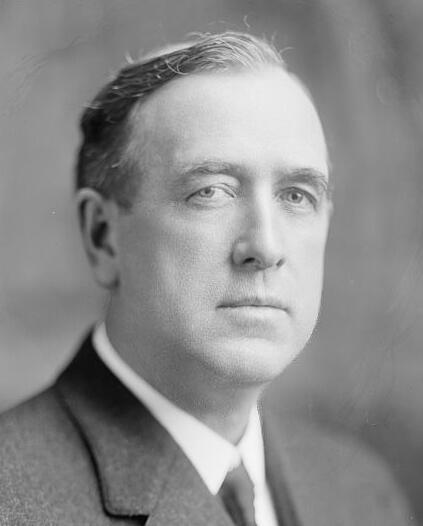
Here you will find contact information for Representative William Henry Wilder, including email address, phone number, and mailing address.
| Name | William Henry Wilder |
| Position | Representative |
| State | Massachusetts |
| District | 3 |
| Party | Republican |
| Status | Former Representative |
| Term Start | April 4, 1911 |
| Term End | March 3, 1915 |
| Terms Served | 2 |
| Born | May 14, 1855 |
| Gender | Male |
| Bioguide ID | W000462 |
About Representative William Henry Wilder
William Henry Wilder (May 14, 1855 – September 11, 1913) was an American lawyer, industrialist, and Republican U.S. Representative from Massachusetts who served in Congress from 1911 until his death in 1913. His congressional service, which encompassed two terms and extended through a significant period in early twentieth-century American political and economic history, reflected his longstanding interest in monetary policy and industrial development.
Wilder was born on May 14, 1855, in Belfast, Maine. In 1866, during his childhood, he moved with his family to Gardner, Massachusetts, a growing industrial community that would remain his home and the base of his professional and political life. Gardner’s emerging manufacturing economy provided the setting in which Wilder began to build his career and develop the business and legal experience that later informed his public service.
In Gardner, Wilder became closely associated with local industry and rose to prominence as president of Wilder Industries, a position that placed him at the center of the city’s commercial activity. Alongside his business pursuits, he undertook the study of law. He was admitted to the bar in 1900, formally entering the legal profession at the turn of the century. Demonstrating both professional advancement and legal competence at the national level, he was admitted to practice before the Supreme Court of the United States in 1909, an achievement that underscored his standing as a lawyer.
Wilder’s legal and business background led him to a particular interest in financial and monetary issues. In 1909 he traveled to Europe to study the monetary systems of various countries, examining their structures and policies at a time when questions of currency, banking, and financial stability were central to public debate in the United States. Drawing on these studies, he wrote numerous articles and pamphlets on monetary questions, contributing to contemporary discussions of economic and fiscal policy and establishing himself as a commentator on monetary reform.
A member of the Republican Party, Wilder entered national politics in the context of these broader economic concerns. He was elected as a Republican to the Sixty-second and Sixty-third Congresses and served as a Representative from Massachusetts from March 4, 1911, until his death on September 11, 1913. His tenure in the U.S. House of Representatives thus covered two terms in office, during which he participated in the legislative process, represented the interests of his Massachusetts constituents, and took part in the democratic governance of the nation at a time of significant political and economic change.
Wilder’s service in Congress occurred during a notable era in American history, marked by progressive reforms, debates over tariff and banking policy, and the evolving role of the federal government in economic regulation. As a member of the House of Representatives, he contributed to the deliberations of the national legislature and brought to bear his experience as a lawyer, industrialist, and student of monetary systems in addressing the issues before Congress.
William Henry Wilder died in office in Washington, D.C., on September 11, 1913, while still serving in the Sixty-third Congress. His death placed him among the members of the United States Congress who died in office in the early twentieth century. He was interred at Crystal Lake Cemetery in Gardner, Massachusetts, returning to the community where he had lived since youth, built his business career, and begun the path that led him to national office.