Representative William Arthur Winstead
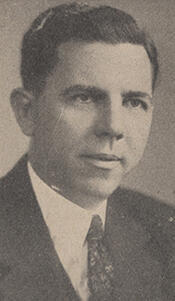
Here you will find contact information for Representative William Arthur Winstead, including email address, phone number, and mailing address.
| Name | William Arthur Winstead |
| Position | Representative |
| State | Mississippi |
| District | 4 |
| Party | Democratic |
| Status | Former Representative |
| Term Start | January 6, 1943 |
| Term End | January 3, 1965 |
| Terms Served | 11 |
| Born | January 6, 1904 |
| Gender | Male |
| Bioguide ID | W000641 |
About Representative William Arthur Winstead
William Arthur Winstead (January 6, 1904 – March 14, 1995) was an American farmer, educator, and Democratic politician who represented Mississippi in the United States House of Representatives from 1943 to 1965. Over the course of 11 consecutive terms, he served as U.S. Representative from Mississippi’s 5th and later 4th congressional districts, participating in the legislative process during a significant period in mid‑twentieth‑century American history and representing the interests of his constituents in a state dominated by one‑party Democratic rule.
Winstead was born near Philadelphia, Neshoba County, Mississippi, on January 6, 1904. He was raised in rural Mississippi and attended the public schools of his native county. Seeking further education, he studied at Clarke Memorial College in Newton, Mississippi, and later attended the University of Alabama at Tuscaloosa. He completed his formal higher education in 1931, graduating from the institution then known as Mississippi Southern College at Hattiesburg, later the University of Southern Mississippi. His early life in an agricultural community and his academic training together shaped his subsequent careers in farming, education, and public service.
Before entering national politics, Winstead established himself both as a farmer and as a local public official. He engaged in agricultural pursuits in Neshoba County, reflecting the economic base of much of rural Mississippi in the early twentieth century. His first elected office was in the field of education: he was chosen superintendent of education for Neshoba County, a position he held from 1935 to 1942. In that role, he oversaw the administration of the county’s public schools during the latter years of the Great Depression and the early period of World War II, gaining administrative experience and local prominence that would support his subsequent bid for Congress.
Winstead was elected as a Democrat to the Seventy‑eighth Congress and to the ten succeeding Congresses, serving from January 3, 1943, to January 3, 1965. His initial election occurred in a political environment in which the Democratic Party overwhelmingly dominated Mississippi politics, following the effective disfranchisement of most African American voters under the state constitution of 1890. Having secured the Democratic nomination in what was essentially a one‑party state, he was unopposed in his first general election campaign for Congress. During his decade‑plus in the House of Representatives, he was reelected repeatedly, facing an opponent only once during his ten successful reelection campaigns, as the Democratic nomination was generally tantamount to election in his district.
As a member of the House of Representatives, Winstead served during a transformative era that spanned World War II, the early Cold War, and the beginnings of the modern civil rights movement. Like nearly all other Mississippi Democrats of his time, he was an ardent segregationist. Following the United States Supreme Court’s 1954 decision in Brown v. Board of Education, which declared segregated public schools unconstitutional, Winstead joined many Southern lawmakers in signing the 1956 Southern Manifesto, a document that condemned the Court’s ruling and advocated resistance to school desegregation. His stance reflected the prevailing views of the white political establishment in Mississippi and the broader South during this period.
Winstead’s long tenure in Congress came to an end in the 1964 election, a watershed year in Southern politics. Running as the Democratic nominee for reelection, he faced Republican challenger Prentiss Walker. In a result widely regarded as surprising, Winstead was defeated by an 11‑point margin. Walker’s victory was closely associated with the strong performance in Mississippi of Republican presidential nominee Barry Goldwater, whose opposition to the Civil Rights Act of 1964 attracted many white voters in the state. Goldwater carried over half of Mississippi’s counties with more than 90 percent of the vote, and this dramatic shift in partisan alignment contributed significantly to Winstead’s loss after more than two decades in office.
After leaving Congress in January 1965, Winstead returned to private life in Mississippi. He resumed his agricultural pursuits, continuing his long association with farming. He also entered the business sector as an automobile dealer, further diversifying his professional activities. Remaining connected to public affairs, he later reentered state service when Governor John Bell Williams, a former colleague in the U.S. House of Representatives, appointed him commissioner of the Mississippi Department of Public Welfare. Winstead held this position from 1968 to 1971, overseeing welfare programs during a period of social and political change in Mississippi and the nation.
William Arthur Winstead spent his later years in his hometown of Philadelphia, Mississippi. He died there on March 14, 1995, at the age of ninety‑one. He was interred in Cedar Lawn Cemetery in Philadelphia, closing a life that had spanned from the Jim Crow era through the civil rights movement and into the late twentieth century, and that included more than two decades of service in the United States Congress as a representative of Mississippi.