Senator William Woodbridge
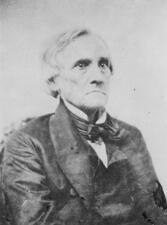
Here you will find contact information for Senator William Woodbridge, including email address, phone number, and mailing address.
| Name | William Woodbridge |
| Position | Senator |
| State | Michigan |
| Party | Whig |
| Status | Former Representative |
| Term Start | December 6, 1819 |
| Term End | March 3, 1847 |
| Terms Served | 2 |
| Born | August 20, 1780 |
| Gender | Male |
| Bioguide ID | W000709 |
About Senator William Woodbridge
William Woodbridge (August 20, 1780 – October 20, 1861) was a U.S. statesman who played a significant role in the political development of Ohio, the Michigan Territory, and the State of Michigan. A member of the Whig Party, he served as the second governor of Michigan and later as a United States senator from Michigan during a formative period in American history. Over the course of his public career, he held legislative, executive, and judicial offices and contributed to the legislative process at both the territorial and national levels.
Woodbridge was born on August 20, 1780, in Norwich, Connecticut. Through his paternal line he was a direct descendant of the English Puritan clergyman John Woodbridge, a heritage that linked him to early New England colonial society. Around 1790, when he was still a child, his family moved west to Marietta, in the Northwest Territory (later Ohio), one of the earliest American settlements in the region. Growing up on the frontier, he was exposed to the legal and political challenges of a developing territory, influences that would shape his later career.
Woodbridge began the study of law in Marietta, where he developed a close and lasting friendship with Lewis Cass, who would later become governor of the Michigan Territory and a prominent national statesman. Seeking more formal legal training, Woodbridge returned to Connecticut to complete his law studies, then came back to Ohio and was admitted to the Ohio bar in 1806. He established a law practice in Marietta that same year. On June 1806, he married Juliana Trumbull, the daughter of John Trumbull, thereby connecting himself by marriage to a distinguished New England family.
Woodbridge quickly entered public life in Ohio. He was elected to the Ohio House of Representatives in 1807. The following year he won election to the Ohio Senate, in which he served from 1809 to 1814. During this period he also held the office of prosecuting attorney for New London (now part of Washington County, Ohio) from 1808 to 1814. His legislative and legal work in Ohio gave him experience in shaping laws and administering justice in a rapidly growing state on the American frontier.
In 1814, Woodbridge’s old friend Lewis Cass, then governor of the Michigan Territory, encouraged him to accept federal appointments as Secretary of the Michigan Territory and collector of customs at the Port of Detroit. On October 15, 1814, Woodbridge reluctantly accepted these appointments from President James Madison and moved to Detroit. As Secretary of the Territory, he was second in command to the governor, and during Cass’s frequent absences he served as acting governor, administering territorial affairs. In 1817, he became a trustee of the University of Michigan, reflecting his engagement with the educational and civic development of the territory.
Under the rules of territorial government, the Michigan Territory initially lacked representation in the U.S. Congress. Woodbridge was instrumental in persuading Congress to authorize the selection of a non-voting delegate for the territory. He himself became the Michigan Territory’s first delegate, serving in the 16th Congress from March 4, 1819, until his resignation on August 9, 1820, due to illness in his family. Throughout his service as delegate he retained his position as Territorial Secretary. In Congress he worked for legislation recognizing old French land titles in the territory in accordance with earlier treaties, thereby helping to settle long-standing property disputes. He also secured approval for the construction of federal roads from the Great Miami River to Detroit and from Detroit to Chicago, critical infrastructure for the region’s economic and military development. Woodbridge was a strong advocate for Michigan’s claim to the Toledo Strip, a disputed border region with the state of Ohio that would later become a central issue in the so‑called Toledo War.
Woodbridge continued to hold important territorial offices after his congressional service. In 1828, President John Quincy Adams appointed him one of three justices of the Territorial Supreme Court of Michigan, succeeding James Witherell. He served on that court until 1832, when his term expired and President Andrew Jackson, from the opposing political camp, chose a replacement who was not a member of the Whig Party, as Woodbridge was. His removal reflected the increasingly partisan character of federal appointments in the Jacksonian era.
As Michigan moved toward statehood, Woodbridge remained an influential figure. He served as a delegate to the Michigan state constitutional convention in 1835, helping to frame the basic law of the new state. He later represented the 1st district in the Michigan State Senate from 1838 to 1839, participating in the early legislative work of the state government. In 1840, he was elected the second Governor of Michigan, leading the Whig Party to sweeping statewide victories under the slogan “Woodbridge and reform,” which paralleled William Henry Harrison’s national presidential campaign. His administration was brief, however, because he resigned the governorship on February 23, 1841, to take a seat in the United States Senate; he was succeeded as governor by his lieutenant governor, J. Wright Gordon.
Woodbridge’s service in the United States Congress occurred during a significant period in American history, marked by debates over westward expansion, internal improvements, and the evolving party system. Elected to the Senate by the Michigan Legislature, he served as a senator from Michigan from March 4, 1841, to March 3, 1847. A member of the Whig Party, he was one of only two Whig senators ever to represent Michigan, serving alongside Augustus S. Porter for most of his term. In the Senate he participated in the democratic process and represented the interests of his constituents, contributing to the legislative process during two terms in office. He held important committee assignments, serving as chairman of the Committee on Public Lands in the 28th Congress from 1843 to 1844, where he dealt with issues related to the disposition and management of federal lands, and as chairman of the Committee on Patents and the Patent Office in the 29th Congress from 1845 to 1846, overseeing matters related to intellectual property and innovation. He did not seek reelection at the end of his term in 1847.
After leaving the Senate, Woodbridge retired from public life and devoted his time primarily to horticulture, reflecting a long-standing personal interest in agriculture and the cultivation of plants. He spent his later years in Detroit, where he had lived for much of his public career. William Woodbridge died in Detroit on October 20, 1861, and was interred in Elmwood Cemetery. His name has been commemorated in several places in Michigan, including Woodbridge Township in Hillsdale County, the Woodbridge Historic District and Woodbridge Avenue in Detroit, Woodbridge Elementary School in the Zeeland Public School District, and Woodbridge Street in Saginaw, underscoring his lasting association with the state he helped to shape.