Senator Willie Person Mangum
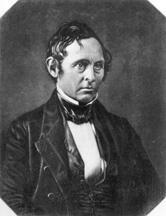
Here you will find contact information for Senator Willie Person Mangum, including email address, phone number, and mailing address.
| Name | Willie Person Mangum |
| Position | Senator |
| State | North Carolina |
| Party | Whig |
| Status | Former Representative |
| Term Start | December 1, 1823 |
| Term End | March 3, 1853 |
| Terms Served | 6 |
| Born | May 10, 1792 |
| Gender | Male |
| Bioguide ID | M000096 |
About Senator Willie Person Mangum
Willie Person Mangum (May 10, 1792 – September 7, 1861) was an American politician and planter who became one of the founders and leading members of the Whig Party and served as a United States Senator from North Carolina during a critical period in the nation’s political development. Born in Orange (later Durham) County, North Carolina, he was raised in the Piedmont region on his family’s land, which would later form part of his own plantation holdings. He came of age in the early national period, in a slaveholding society that shaped both his economic interests and his political outlook.
Mangum pursued formal education in North Carolina, attending the University of North Carolina at Chapel Hill, where he studied the liberal arts and prepared for a career in law and public life. After reading law, he was admitted to the bar and began legal practice in North Carolina. His early professional years combined legal work with the management of agricultural interests, laying the groundwork for his later status as a prominent planter. His plantation, known as Walnut Hall, became a significant slave plantation in the region and a central element of his personal wealth and social standing.
Mangum’s political career developed first at the state level, where he served in the North Carolina legislature and gained a reputation as an articulate advocate of Southern interests and a critic of what he regarded as executive overreach at the federal level. He was elected to the United States House of Representatives as a Jacksonian, serving one term from 1823 to 1826, and thus began his long association with the national legislature. During these early years in Congress, he participated in debates over internal improvements, tariffs, and the balance of power between the states and the federal government, issues that would continue to define his public life.
Willie Person Mangum’s principal national prominence came through his service in the United States Senate, where he represented North Carolina between 1831 and 1836 and again between 1840 and 1853. His service in Congress, spanning six terms in office when his House and Senate tenures are considered together, occurred during a significant period in American history marked by the rise of mass party politics, the Bank War, the Nullification Crisis, and the mounting sectional tensions over slavery and territorial expansion. Initially aligned with Andrew Jackson, Mangum broke with the administration over the removal of federal deposits from the Bank of the United States and other executive policies, a rupture that helped propel him into the emerging anti-Jackson coalition that became the Whig Party.
As one of the founders and leading members of the Whig Party, Mangum played a central role in shaping its opposition to Jacksonian Democracy and its advocacy of congressional supremacy, a national bank, and a cautious approach to territorial expansion. In the presidential election of 1836, he was one of several regional Whig candidates for president, representing primarily Southern Whig interests as part of the party’s strategy to defeat Democratic candidate Martin Van Buren by dividing the electoral vote among multiple Whig contenders. Although the strategy failed and Van Buren was elected, Mangum’s candidacy underscored his stature within the party and his prominence as a national political figure.
Mangum’s most consequential institutional role in Congress came during the presidency of John Tyler. From 1842 to 1845 he served as President pro tempore of the Senate for most of Tyler’s administration. Because Tyler had no vice president and there was then no constitutional mechanism for filling an intra-term vice-presidential vacancy, Mangum, as President pro tempore, stood first in the presidential line of succession. Had Tyler died, resigned, or been removed from office during this period, Mangum would have become acting president of the United States. In the Senate he was deeply involved in the legislative process, participating in debates over the annexation of Texas, the tariff, and other major questions of the 1840s, and he consistently represented the interests of his North Carolina constituents within the broader Whig program.
In his private life, Mangum was a substantial slaveholding planter at Walnut Hall, where his economic and social position reflected the hierarchical structure of the antebellum South. His plantation lands also bore a more personal historical association: a 1931 biography of John Chavis, a free Black educator and Presbyterian minister who had taught Mangum in his youth, recorded that Mangum allowed his former teacher to be buried on his land. The gravesite, long unmarked, was rediscovered in 1988 by the John Chavis Historical Society and is now identified as the “Old Cemetery” on maps of Hill Forest, linking Mangum’s estate to the history of one of the earliest known African American educators in the United States.
Willie Person Mangum remained a significant figure in North Carolina and national politics through the early 1850s, as the Whig Party began to fracture under the strain of sectional conflict. He retired from the Senate in 1853 and returned to his plantation and legal affairs in North Carolina. Mangum died on September 7, 1861, at his home in North Carolina, shortly after the outbreak of the Civil War. His career, spanning the era from the early republic through the crisis of the Union, reflected both the aspirations and contradictions of the antebellum South, combining influential service in the United States Congress with the life of a slaveholding planter whose land would later become a site of historical memory.