Representative Willis Chatman Hawley
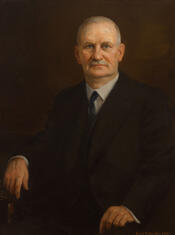
Here you will find contact information for Representative Willis Chatman Hawley, including email address, phone number, and mailing address.
| Name | Willis Chatman Hawley |
| Position | Representative |
| State | Oregon |
| District | 1 |
| Party | Republican |
| Status | Former Representative |
| Term Start | December 2, 1907 |
| Term End | March 3, 1933 |
| Terms Served | 13 |
| Born | May 5, 1864 |
| Gender | Male |
| Bioguide ID | H000379 |
About Representative Willis Chatman Hawley
Willis Chatman Hawley (May 5, 1864 – July 24, 1941) was an American politician and educator from Oregon who served 13 consecutive terms as a Republican member of the United States House of Representatives from 1907 to 1933. Best known nationally as a lead sponsor of the Smoot–Hawley Tariff Act of 1930, he played a prominent role in federal fiscal policy during a significant period in American history. Over the course of his long tenure in Congress, Hawley participated actively in the legislative process and represented the interests of his Oregon constituents during an era that spanned the Progressive Era, World War I, and the onset of the Great Depression.
Hawley was born on a farm in the old Belknap settlement near Monroe in Benton County, Oregon, on May 5, 1864. Raised in a rural setting, he attended local country schools before pursuing higher education. In 1884 he graduated from Willamette University in Salem, Oregon, with a Bachelor of Science degree. He quickly moved into educational work, serving as principal of Umpqua Academy from 1884 to 1886. Continuing his studies at Willamette, Hawley earned a Bachelor of Arts degree in 1888 and, in the same year, completed a Bachelor of Laws from the university’s law department. He later received a master’s degree from Willamette in 1890, reflecting his sustained commitment to academic advancement.
Hawley’s early career was rooted in education and academic administration. From 1888 to 1891 he served as president of the Oregon State Normal School at Drain, south of Eugene, guiding the institution’s teacher-training mission. In 1891 he joined the faculty of Willamette University, where he taught history and economics. His leadership abilities led to his appointment as president of Willamette University in 1893, a position he held until 1902. During this period he combined administrative duties with his professorship, ultimately serving as a professor of history and economics at Willamette for a total of sixteen years. After stepping down from the presidency, he engaged in a variety of business and educational ventures in Oregon, broadening his experience beyond the academic sphere and laying the groundwork for his later political career.
Hawley entered national politics in 1906, when he won election as a Republican to represent Oregon’s 1st Congressional District in the United States House of Representatives. He took his seat in Washington, D.C., on March 4, 1907, and was subsequently re-elected every two years for the next twelve sessions of Congress, serving continuously until March 3, 1933. His 13 terms in office coincided with major developments in American public life, and he became an influential figure in shaping federal policy. During his congressional service he was appointed to a number of special bodies, including the National Forest Reservation Commission, which oversaw the acquisition of lands for national forests, and the Special Committee on Rural Credits, created by Congress in 1915 to address agricultural finance and credit needs. He also served as a member of the Commission for the Celebration of the Two Hundredth Anniversary of the Birth of President and General George Washington, reflecting his involvement in national commemorative and civic activities.
Within the House of Representatives, Hawley rose to positions of considerable responsibility. He served as chairman of the powerful Committee on Ways and Means during the Seventieth and Seventy-first Congresses, placing him at the center of debates over taxation, tariffs, and federal revenue. In this capacity he became closely associated with tariff legislation, and in 1930 he was a co-sponsor and leading advocate of the Smoot–Hawley Tariff Act. The law raised import tariffs to record levels, embodying the protectionist trade policies of the period and exerting a lasting influence on both domestic economic policy and international trade relations. His role in this legislation became the most widely recognized aspect of his congressional career.
Hawley’s long service in Congress came to an end amid the political realignments of the early 1930s. In 1932 he was defeated in his bid for renomination to his House seat, bringing his 26-year tenure in the House of Representatives to a close. He left office on March 3, 1933, at the conclusion of his final term. After departing from Congress, Hawley returned to Salem, Oregon, where he resumed the practice of law, drawing on his legal training and decades of legislative experience. He remained in Salem for the rest of his life.
Willis Chatman Hawley died in Salem on July 24, 1941, at the age of 77. He was buried in City View Cemetery in Salem, Oregon. His career, spanning education, university leadership, and more than a quarter-century in the United States House of Representatives, left a significant imprint on both Oregon’s public life and the national legislative record, particularly in the realm of tariff and fiscal policy.