Representative Willis James Hulings
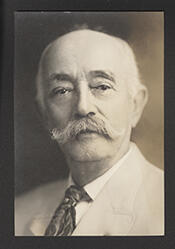
Here you will find contact information for Representative Willis James Hulings, including email address, phone number, and mailing address.
| Name | Willis James Hulings |
| Position | Representative |
| State | Pennsylvania |
| District | 28 |
| Party | Republican |
| Status | Former Representative |
| Term Start | April 7, 1913 |
| Term End | March 3, 1921 |
| Terms Served | 2 |
| Born | July 1, 1850 |
| Gender | Male |
| Bioguide ID | H000939 |
About Representative Willis James Hulings
Willis James Hulings (July 1, 1850 – August 8, 1924) was a Progressive and Republican member of the U.S. House of Representatives from Pennsylvania. He was born in Rimersburg, Clarion County, Pennsylvania, where he spent his early years before pursuing formal education and professional training. He attended Kittanning Academy in Kittanning, Pennsylvania, laying the foundation for a career that would combine law, engineering, business, and military service with long involvement in state and national politics.
After his preparatory education, Hulings studied law and was admitted to the bar in multiple jurisdictions, including Pennsylvania, West Virginia, and Arizona. In addition to his legal training, he became a civil engineer and entered the mining and petroleum industries, sectors that were central to the economic development of Pennsylvania in the late nineteenth century. His work as a civil engineer and his engagement in mining and the petroleum business gave him practical experience in the industrial and resource-based economy that shaped the communities he would later represent in public office.
Hulings began his public career in the military and state politics. He joined the Pennsylvania National Guard in 1876 and served continuously until 1912, advancing through the ranks from private to brigadier general. His long service in the Guard reflected both his personal commitment to military affairs and the broader role of state militias in national defense during that era. During the Spanish–American War in 1898, he served as a general in the United States Army, contributing to the nation’s wartime mobilization and gaining experience that further enhanced his public standing.
In civil office, Hulings was first elected as a Republican to the Pennsylvania House of Representatives, where he served from 1881 to 1887. His tenure in the state legislature coincided with a period of rapid industrial growth and political realignment in Pennsylvania, and it marked the beginning of a long legislative career. After a period focused on his professional and military responsibilities, he returned to state government as a member of the Pennsylvania State Senate, serving from 1906 to 1910. In both chambers of the state legislature, he participated in shaping policies affecting industry, infrastructure, and public institutions in a state undergoing significant economic and social change.
Willis James Hulings’s service in the United States Congress occurred during a significant period in American history. He was elected as a Progressive to the Sixty-third Congress and served as a Representative from Pennsylvania from March 4, 1913, to March 3, 1915. As a member of the House of Representatives during the Progressive Era, Hulings participated in the democratic process and represented the interests of his constituents at a time when the federal government was expanding its role in economic regulation and social reform. He was an unsuccessful candidate for reelection in 1914, reflecting the shifting political currents between the Progressive and Republican factions.
After his initial term in Congress, Hulings remained active in politics and public life. He returned to the U.S. House of Representatives as a Republican, being elected to the Sixty-sixth Congress and serving from March 4, 1919, to March 3, 1921. In total, Willis James Hulings contributed to the legislative process during two terms in office, serving in Congress from 1913 to 1915 and again from 1919 to 1921. During these nonconsecutive terms, he represented Pennsylvania’s interests in a period that encompassed World War I and its aftermath, participating in debates over domestic policy and postwar adjustment. He was an unsuccessful candidate for reelection in 1920, which ended his federal legislative career.
In his later years, Hulings remained identified with the legal, military, and political accomplishments that had defined his public life. He died on August 8, 1924, in Oil City, Pennsylvania, a community closely tied to the petroleum industry in which he had long been engaged. He was interred in Grove Hill Cemetery, leaving a record of service that spanned state and national legislatures, the National Guard, and the United States Army, and that reflected the intertwined development of Pennsylvania’s political institutions and industrial economy in the late nineteenth and early twentieth centuries.