Representative Willis Sweet
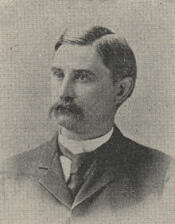
Here you will find contact information for Representative Willis Sweet, including email address, phone number, and mailing address.
| Name | Willis Sweet |
| Position | Representative |
| State | Idaho |
| District | 1 |
| Party | Republican |
| Status | Former Representative |
| Term Start | December 2, 1889 |
| Term End | March 3, 1895 |
| Terms Served | 3 |
| Born | January 1, 1856 |
| Gender | Male |
| Bioguide ID | S001110 |
About Representative Willis Sweet
Willis Sweet (January 1, 1856 – July 9, 1925) was an American lawyer, jurist, newspaper editor, and Republican politician who became the first United States Representative elected from Idaho following its admission to statehood in 1890. Born in Alburgh, Vermont, on New Year’s Day 1856, he attended public schools before moving west and enrolling at the University of Nebraska in Lincoln, where he was a member of the Phi Delta Theta fraternity. During his youth and early adulthood he learned the printer’s trade in Lincoln, acquiring skills that would later support his work in journalism and public life.
In 1881, Sweet relocated further west to Moscow in the Idaho Territory, joining the wave of settlers and professionals moving into the developing region. There he became the first editor of the Moscow Mirror in 1882, combining his printing background with editorial leadership in a frontier community. While in Moscow he studied law, was admitted to practice, and embarked on a legal career that led to positions as an attorney, judge, and ultimately a justice of the territorial supreme court. His growing prominence in territorial affairs coincided with Idaho’s transition from territory to statehood and placed him at the center of several formative institutional developments.
Sweet played a key role in the establishment of higher education in Idaho. In the late 1880s, he drafted the legislation that brought the University of Idaho to Moscow, submitting his proposal through territorial councilor John W. Brigham, who carried it to enactment. Following the creation of the institution, Sweet served as the first president of the university’s board of regents, helping to shape its early governance and direction. His association with the university would later be commemorated by the naming of a residence hall in his honor, reflecting his foundational role in securing the institution for Moscow and the state.
Sweet’s legal and political career advanced rapidly in the final years of Idaho’s territorial period. On April 24, 1889, President Benjamin Harrison gave him a recess appointment as United States Attorney for the Territory of Idaho, placing him in a key federal prosecutorial role. That same year he served as a delegate to the Idaho Constitutional Convention representing Latah County in July and August 1889, participating in the drafting of the fundamental law that would govern the new state. On November 19, 1889, Harrison again used a recess appointment to elevate Sweet to associate justice of the Idaho Territorial Supreme Court. His nomination was formally received by the United States Senate on December 16, 1889, and he was confirmed on January 27, 1890. Under the provisions of the new Idaho Constitution, he remained on the bench after statehood until the first justices of the Idaho Supreme Court were elected in October 1890.
With Idaho’s admission to the Union in 1890, Sweet entered national politics. He was the first United States Representative elected from Idaho following statehood, serving as a Republican in the House of Representatives from 1890 to 1895 and representing the state at-large. Existing records also note his congressional service as extending from 1889 to 1895, reflecting his role in this transitional period. A member of the Republican Party, he contributed to the legislative process during three terms in office and participated actively in the democratic process on behalf of his constituents. His tenure in Congress coincided with a significant period in American history marked by intense debates over monetary policy and economic development in the West.
During his congressional service, Sweet became a leading advocate of the “Free Silver” movement, demanding the free and unlimited coinage of silver into legal tender as a means of expanding the money supply and channeling capital into the large silver mining industry of the Mountain West, including Idaho. He closely followed the parliamentary tactics of Irish nationalist Charles Stewart Parnell in the British Parliament, attempting to force consideration of his proposals by obstructing other legislative business until action was taken on silver coinage. These efforts were thwarted by Speaker of the House Thomas Reed, whose firm control of House procedure limited such obstruction. As the national Republican Party moved toward a firm gold standard, Sweet’s position became increasingly at odds with party leadership, and he was ultimately defeated by supporters of the gold standard.
Sweet’s commitment to silver politics continued after he left the House. When William McKinley was nominated for president in 1896 on a gold standard platform, Sweet broke with the mainstream Republican position and supported William Jennings Bryan, the leading national advocate of free silver, who ran on the Democratic, Populist, and Silver Republican party labels. That same year Sweet sought election to the United States Senate from Idaho, but he was defeated in the Idaho Legislature by Populist candidate Henry Heitfeld, reflecting the complex realignment of parties and issues in the state during the 1890s.
Following his congressional career and unsuccessful Senate bid, Sweet resumed the practice of law in northern Idaho, establishing himself as an attorney in Coeur d’Alene. His legal and political experience later led to a federal territorial appointment beyond the continental United States. In 1903 he was appointed attorney general of Puerto Rico, then under United States administration, and he served in that capacity until 1905. After leaving that office, he remained in Puerto Rico for much of the remainder of his life. From 1913 until his death in 1925, Sweet worked as a newspaper editor in San Juan, returning to the profession that had first brought him prominence in Idaho.
Willis Sweet died on July 9, 1925. His legacy in Idaho is reflected not only in his pioneering role as the state’s first Representative in Congress and his vigorous advocacy for free silver, but also in his contributions to the establishment and governance of the University of Idaho. A residence hall at the university was named in his honor when it opened in 1936; the building later became Carol Ryrie Brink Hall, a faculty office building. The Willis Sweet residence hall designation was subsequently transferred to the new Theophilus Tower in 1969, and later to the former McConnell Hall at the northeast corner of Sixth and Rayburn streets, ensuring that his name remained associated with the institution he helped to found.