Senator Wilson Lumpkin
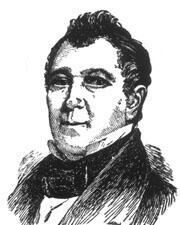
Here you will find contact information for Senator Wilson Lumpkin, including email address, phone number, and mailing address.
| Name | Wilson Lumpkin |
| Position | Senator |
| State | Georgia |
| Party | Democratic |
| Status | Former Representative |
| Term Start | December 4, 1815 |
| Term End | March 3, 1841 |
| Terms Served | 5 |
| Born | January 14, 1783 |
| Gender | Male |
| Bioguide ID | L000512 |
About Senator Wilson Lumpkin
Wilson Lumpkin (January 14, 1783 – December 28, 1870) was an American planter, attorney, and politician who became one of Georgia’s most prominent public figures in the early nineteenth century. Born in Virginia, he moved with his family to Georgia as a youth and came of age on the Georgia frontier, where he later established himself as a planter and lawyer. He was closely connected to a powerful political family network in the state: his brother Joseph Henry Lumpkin became the first chief justice of the Supreme Court of Georgia, and their nephew John Henry Lumpkin later served as a U.S. Representative from Georgia. These family ties, combined with his own legal and agricultural pursuits, helped position him for a long career in public service.
Lumpkin’s formal education was limited by the standards of later generations, but he read law and was admitted to the bar, beginning a legal practice in Georgia. Settling in Clarke County, in the northeast part of the state, he combined his legal work with planting, acquiring land and enslaved labor and becoming part of the state’s planter class. His early involvement in local affairs and his legal reputation led naturally into elective office in the Georgia legislature, where he first gained experience in lawmaking and party politics during the formative years of the state’s political institutions.
From his base in Clarke County, Lumpkin entered national politics as a member of the United States Congress. He served as a United States Representative from Georgia, aligning himself with the Democratic Party and the Jeffersonian-Jacksonian political tradition that emphasized states’ rights and agrarian interests. Over the course of his national career he held multiple federal offices, including service as a United States Senator from Georgia. According to existing records, Wilson Lumpkin served as a Senator from Georgia in the United States Congress from 1815 to 1841, during which time he was a member of the Democratic Party and contributed to the legislative process during five terms in office. His service in Congress occurred during a significant period in American history, encompassing debates over territorial expansion, federal authority, and Native American policy, and as a member of the Senate he participated in the democratic process and represented the interests of his Georgia constituents.
Lumpkin’s most consequential role came at the state level when he was elected governor of Georgia. He served two terms as governor from 1831 to 1835, a period dominated by the forced removal of Native American nations from the Southeast. As governor, he was a vigorous advocate of Georgia’s claims to Creek and Cherokee lands and supported the policies that led to the Indian Removal of the Creek and Cherokee peoples to Indian Territory west of the Mississippi River. His administration worked closely with federal authorities under President Andrew Jackson to clear Native American title to lands within Georgia’s borders, thereby opening them to settlement and development by European American settlers and expanding the plantation economy. These policies, while popular among many white Georgians of the era, had devastating consequences for Native communities and remain a central and controversial aspect of his legacy.
After his gubernatorial service, Lumpkin continued to play an active role in public life. He returned to federal office as a United States Senator, again representing Georgia’s interests in Washington during a time of intense sectional and partisan conflict. In addition to his formal offices, he remained influential in state politics and public affairs, drawing on his long experience in both the Georgia legislature and the national Congress. His extended tenure in public service, spanning from the early republic through the antebellum period, made him a key figure in shaping Georgia’s political and legal landscape.
Lumpkin’s family and commemorations further reflected his prominence in Georgia history. His grandson, Middleton P. Barrow, also served in the U.S. Senate, continuing the family’s representation of Georgia at the national level. The settlers of Terminus, the railroad settlement that would become present-day Atlanta, voted to rename their town “Lumpkin” in his honor. He declined this personal honor and instead requested that the town be named for his young daughter, Martha Atalanta Lumpkin (later Compton), leading to the city’s first true name, “Marthasville.” Lumpkin County, Georgia, was named for him, and the Lumpkin House on the campus of the University of Georgia, which he built, stands as another memorial to his life and work.
In his later years, Lumpkin retired from active politics but remained a respected elder statesman in Georgia. He continued to oversee his planting interests and maintained his engagement with legal and educational affairs, particularly through his association with the University of Georgia and the broader civic life of the state. Wilson Lumpkin died on December 28, 1870, after witnessing the transformation of Georgia from a frontier state to a central theater of the Civil War and Reconstruction. His long career—as planter, attorney, state legislator, governor, United States representative, and United States senator—left a lasting imprint on Georgia’s political development and on the broader history of the American South.