Representative Winfield Scott Hammond
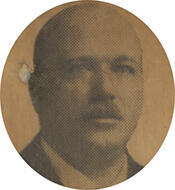
Here you will find contact information for Representative Winfield Scott Hammond, including email address, phone number, and mailing address.
| Name | Winfield Scott Hammond |
| Position | Representative |
| State | Minnesota |
| District | 2 |
| Party | Democratic |
| Status | Former Representative |
| Term Start | December 2, 1907 |
| Term End | March 3, 1915 |
| Terms Served | 4 |
| Born | November 17, 1863 |
| Gender | Male |
| Bioguide ID | H000135 |
About Representative Winfield Scott Hammond
Winfield Scott Hammond (November 17, 1863 – December 30, 1915) was an American educator, lawyer, legislator, and governor, and a prominent member of the Democratic Party in Minnesota during the early twentieth century. He was born on November 17, 1863, in Southborough, Massachusetts, the son of Ellen P. (Panton) Hammond, who was born in England, and John Washington Hammond. Raised in New England, he came of age during the post–Civil War era, a period that shaped his later interest in public service and governmental reform.
Hammond pursued higher education at Dartmouth College in Hanover, New Hampshire, where he earned both a bachelor’s degree and a master’s degree. His academic success and intellectual rigor later contributed to his reputation as “a scholar in politics,” an inscription that would be placed beneath his bust in the Minnesota State Capitol. At the age of 21, he moved west to Minnesota, settling in Mankato, where he began a career in education. There he served as principal of the Mankato High School, establishing himself as an educator and community leader. While advancing in the field of education, he also undertook the study of law, demonstrating an early commitment to combining scholarship with practical public service.
As Hammond’s responsibilities in education expanded, he became superintendent of schools in Watonwan County, Minnesota. During this period he continued his legal studies, ultimately gaining admission to the bar. He made his permanent home in St. James, Minnesota, where he established a law practice and quickly emerged as a political contender in a region dominated by the Republican Party. A staunch Democrat in a largely Republican community, he first sought election to the United States House of Representatives in 1892. Although this initial bid for Congress was unsuccessful, his perseverance, growing stature in the legal profession, and ability to attract bipartisan support laid the groundwork for his later electoral success.
Hammond’s national political career began with his election to the United States House of Representatives as a Democrat from Minnesota. He served as a Representative from Minnesota in the United States Congress from March 4, 1907, to January 6, 1915, participating in the legislative process during four consecutive terms in office. He represented Minnesota in the 60th, 61st, 62nd, and 63rd Congresses, a significant period in American history marked by progressive reforms and debates over economic regulation, social policy, and governmental efficiency. As a member of the House of Representatives, Hammond contributed to the democratic process and represented the interests of his constituents, working within a Congress that was grappling with the challenges of modernization and reform in the early twentieth century.
Hammond’s service in Congress coincided with a time of substantial change in both Minnesota and the nation, and he became known for his thoughtful approach to legislation and his commitment to effective government. A member of the Democratic Party, he was part of a minority political tradition in Minnesota, where Republicans were often dominant. Nonetheless, his persistence and ability to work across party lines enabled him to maintain his seat through four terms. In 1914, during his fourth consecutive term, he chose to interrupt his congressional career by leaving Washington to run for governor of Minnesota, seeking to apply his ideas about governmental reorganization and efficiency at the state level.
Elected governor, Hammond became the 18th Governor of Minnesota and took office on January 5, 1915. He was one of only five Minnesota Democrats to win a gubernatorial election while a Democrat occupied the White House, underscoring the unusual political circumstances of his victory. He was also the last governor from Minnesota to have been a member of the Minnesota Democratic Party before it later merged with the Farmer-Labor Party to form the Minnesota Democratic–Farmer–Labor Party (DFL). Although his tenure was brief, he advanced ambitious plans to reorganize state government, aiming to minimize bureaucracy, eliminate waste, and make the machinery of Minnesota’s government operate more efficiently. His most notable legislative achievement during this short period was the “county option bill,” a measure restricting liquor sales that won the approval of prohibition advocates and reflected the era’s growing temperance movement.
Hammond’s time as governor was tragically cut short. After only about eight months in office, he became ill with ptomaine poisoning while traveling in the South. He subsequently suffered a stroke and died in Clinton, Louisiana, on December 30, 1915, at the age of 52. His death made him the second governor of Minnesota to die in office. Lieutenant Governor Joseph Alfred Arner Burnquist succeeded him as governor, filling the vacancy created by Hammond’s death. Hammond’s career left a legacy of intellectual rigor, public service, and reform-minded leadership. Biographical information and his gubernatorial records are preserved and available for research at the Minnesota Historical Society, and additional documentation of his life and service can be found in the Biographical Directory of the United States Congress and at his gravesite memorialized through Find a Grave.