Representative Winnifred Sprague Mason Huck
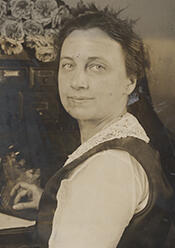
Here you will find contact information for Representative Winnifred Sprague Mason Huck, including email address, phone number, and mailing address.
| Name | Winnifred Sprague Mason Huck |
| Position | Representative |
| State | Illinois |
| District | -1 |
| Party | Republican |
| Status | Former Representative |
| Term Start | April 11, 1921 |
| Term End | March 3, 1923 |
| Terms Served | 1 |
| Born | September 14, 1882 |
| Gender | Female |
| Bioguide ID | H000900 |
About Representative Winnifred Sprague Mason Huck
Winnifred Sprague Mason Huck (née Mason; September 14, 1882 – August 24, 1936) was an American journalist and Republican politician from Illinois who became the third woman to serve in the United States Congress, after Jeannette Rankin and Alice Mary Robertson. She was the first woman to represent Illinois in Congress, the first woman to win a special election for the United States Congress, and the first mother to serve in that body. Her brief but notable congressional career came when she was elected to fill the at-large seat of her father, Representative William Ernest Mason, following his death.
Huck was born Winnifred Sprague Mason in Chicago, Illinois, on September 14, 1882. She was raised in a politically engaged household, as her father was a prominent Illinois Republican who served in both the U.S. House of Representatives and the U.S. Senate. She attended public schools in Chicago and later in Washington, D.C., where the family lived during her father’s periods of congressional service. This early exposure to national politics and public affairs helped shape her understanding of government and the legislative process.
After completing her schooling, Huck worked as her father’s secretary, gaining practical experience in the day-to-day operations of a congressional office. In this role she handled correspondence, assisted with legislative matters, and observed committee work and floor proceedings, acquiring a detailed familiarity with the workings of Congress. This background prepared her for her own later service and gave her insight into the concerns of constituents in Illinois.
Huck was elected as a Republican to the 67th United States Congress by special election to fill the vacancy caused by the death of her father, William Ernest Mason. She won the at-large seat from Illinois and served a partial term from November 7, 1922, to March 3, 1923. Her service in Congress occurred during a significant period in American history, in the early years after women gained the right to vote nationally with the ratification of the Nineteenth Amendment. As a member of the House of Representatives, Winnifred Sprague Mason Huck participated in the democratic process, represented the interests of her Illinois constituents, and contributed to the legislative process during her one term in office.
During her brief tenure, Huck distinguished herself from many first-term Representatives by actively introducing several bills rather than limiting herself to routine participation. Her term overlapped with the one-day service of Rebecca Felton of Georgia, the first woman to serve in the United States Senate, marking a symbolic moment when women were present in both chambers of Congress for the first time. Although her time in office was short, Huck’s election and legislative activity underscored the emerging role of women in national politics and within the Republican Party.
Huck sought to continue her congressional career but was unsuccessful in her subsequent political efforts. She was an unsuccessful candidate for renomination to the 68th Congress in 1922 and also failed in her bid for the Republican nomination in a special election held on February 27, 1923, to fill the vacancy caused by the death of Representative James Mann. After leaving Congress, she joined the National Woman’s Party, aligning herself with ongoing efforts to advance women’s political and legal equality in the United States.
In later years, Huck pursued a career as an investigative journalist. Drawing on her political experience and reform-minded outlook, she focused on social issues and became known for exposing abuses in the prison system. Her reporting brought attention to conditions faced by incarcerated individuals and contributed to broader public discussions about penal reform. Winnifred Sprague Mason Huck died in Chicago, Illinois, on August 24, 1936. Her ashes were interred in Oakwood Cemetery in Waukegan, Illinois, closing the life of a pioneering figure who bridged politics and journalism during a transformative era for women in American public life.