Representative Wint Smith
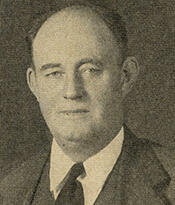
Here you will find contact information for Representative Wint Smith, including email address, phone number, and mailing address.
| Name | Wint Smith |
| Position | Representative |
| State | Kansas |
| District | 6 |
| Party | Republican |
| Status | Former Representative |
| Term Start | January 3, 1947 |
| Term End | January 3, 1961 |
| Terms Served | 7 |
| Born | October 7, 1892 |
| Gender | Male |
| Bioguide ID | S000640 |
About Representative Wint Smith
Wint Smith (October 7, 1892 – April 27, 1976) was an American lawyer, military officer, and Republican politician who served seven terms as a U.S. Representative from Kansas from 1947 to 1961. His congressional service spanned a significant period in American history, encompassing the early Cold War, the Korean War, and the beginnings of the modern civil rights era, during which he participated in the legislative process and represented the interests of his Kansas constituents.
Smith was born in Mankato, Jewell County, Kansas, where he attended public schools and graduated from Mankato High School. On January 1, 1915, he enlisted in the Kansas National Guard, marking the beginning of a long and distinguished military career. From June 26 to August 30, 1916, he served in federal service during the Pancho Villa Expedition on the Mexican border. After the United States entered World War I, he attended the First Officers Training Camp from May 11 to August 14, 1917, and was commissioned a second lieutenant on August 15, 1917. Serving in France with the Infantry, he was wounded in action and earned two Purple Hearts, rising to the rank of captain before his discharge on September 4, 1919.
Following World War I, Smith pursued higher education and professional training. He attended the University of Kansas in 1920 and subsequently enrolled at Yale Law School, from which he studied law in 1922. He was admitted to the bar in 1923 and commenced the practice of law in Kansas City, Kansas. On March 10, 1923, he was commissioned a captain in the Signal Corps, commanding the 35th Signal Company of the 35th Division, headquartered in Kansas City, Kansas, thus continuing his parallel military and legal careers. He was admitted to practice in all federal courts, including the Supreme Court of the United States in 1934, reflecting his growing stature in the legal profession.
During the interwar years, Smith advanced through the ranks of the Kansas National Guard while expanding his public service in state government. On July 1, 1933, he was commissioned a major in the Infantry, and on July 30, 1935, he was commissioned a lieutenant colonel in the Cavalry, serving as executive officer of the 114th Cavalry Regiment. In civilian life, from 1931 to 1940 he served as assistant attorney general of Kansas, and from 1932 to 1940 he was attorney for the Kansas Highway Commission. As chief of the legal department of the Highway Commission, he also served as director of the motor vehicle inspectors until the formation of the Kansas Highway Patrol in 1937. During this period, the Kansas Legislature in 1933 authorized the Highway Commission to hire motor vehicle inspectors—initially ten, increased to twenty-six by November 1933—charged with patrolling state highways. In 1935, Governor Alfred M. Landon directed these inspectors to “curb banditry” as far as the law allowed, and under Landon’s support and with statewide police jurisdiction, the inspectors began an aggressive campaign against crime, in which Smith played a key administrative and legal role.
On the eve of World War II, Smith’s military responsibilities increased further. When the 114th Cavalry Regiment was converted into the 127th Field Artillery Regiment of the 35th Division in October 1940, he became executive officer of the new regiment. He was inducted into federal service with the 35th Division in December 1940. From May 1941 to December 1945, he served as commanding officer of the division’s provisional antitank battalion, later designated the 635th Tank Destroyer Battalion. As the unit’s sole commanding officer from its activation to its inactivation, he led it in training and combat in the United States and overseas for twenty-two months in England, France, Belgium, and Germany. At the conclusion of his World War II service, he retired from the military with the rank of brigadier general and subsequently resumed the practice of law.
Smith entered national politics after the war and was elected as a Republican to the Eightieth Congress and to the six succeeding Congresses, serving from January 3, 1947, to January 3, 1961, as a U.S. Representative from Kansas. Over the course of his seven terms, he contributed to the legislative process during a transformative era in American domestic and foreign policy, consistently representing the interests of his Kansas constituents. His voting record reflected the conservative tendencies of many Kansas Republicans of his time; notably, he voted against the Civil Rights Act of 1957 and the Civil Rights Act of 1960, key early federal civil rights measures. Smith chose not to be a candidate for renomination in 1960 to the Eighty-seventh Congress and was succeeded by fellow Republican Robert J. Dole of Russell, Kansas.
After leaving Congress in January 1961, Smith returned to his home community in Mankato, Kansas. He engaged in farming and ranching, maintaining his ties to the agricultural life of his native state while also drawing on his long experience in law, public administration, and military service. He lived quietly in retirement until his death in Wichita, Kansas, on April 27, 1976. Wint Smith was interred in Mount Hope Cemetery in Mankato, Kansas, closing a life that combined military distinction, legal accomplishment, and fourteen years of service in the United States House of Representatives.