Senator Winthrop Murray Crane
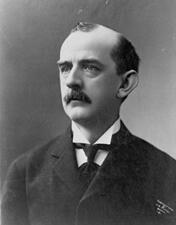
Here you will find contact information for Senator Winthrop Murray Crane, including email address, phone number, and mailing address.
| Name | Winthrop Murray Crane |
| Position | Senator |
| State | Massachusetts |
| Party | Republican |
| Status | Former Representative |
| Term Start | October 12, 1904 |
| Term End | March 3, 1913 |
| Terms Served | 2 |
| Born | April 23, 1853 |
| Gender | Male |
| Bioguide ID | C000875 |
About Senator Winthrop Murray Crane
Winthrop Murray Crane served as a Senator from Massachusetts in the United States Congress from 1904 to 1913. A member of the Republican Party, Winthrop Murray Crane contributed to the legislative process during 2 terms in office.
Winthrop Murray Crane’s service in Congress occurred during a significant period in American history. As a member of the Senate, Winthrop Murray Crane participated in the democratic process and represented the interests of constituents.
Winthrop Murray Crane (commonly referred to as W. Murray Crane or simply Murray Crane; April 23, 1853 – October 2, 1920) was an American businessman and Republican Party politician who served as the 40th governor of Massachusetts from 1900 to 1903 and represented that state in the United States Senate from 1904 to 1913. In 1879, he secured his family company, paper manufacturer Crane & Co., an exclusive government contract to supply the paper for United States currency, a monopoly the company holds to this day. During the 1890s he became increasingly active in state Republican politics, and became a dominant figure in the local, state, and national party. He was successively elected the 37th lieutenant governor of Massachusetts (in 1896) and 40th governor (in 1899). In 1904, he was appointed to the United States Senate and served until 1913. Crane advised Presidents Theodore Roosevelt and William Howard Taft. His success as Governor in defusing a Teamsters strike prompted Roosevelt to bring him in as a negotiator to resolve the Coal Strike of 1902. He refused repeated offers for cabinet-level positions and was known to dislike campaigning and giving speeches. Near the end of his career, he served as a political mentor to future President Calvin Coolidge, who was elected vice president one month after Crane’s death.