Representative Winthrop Welles Ketchum
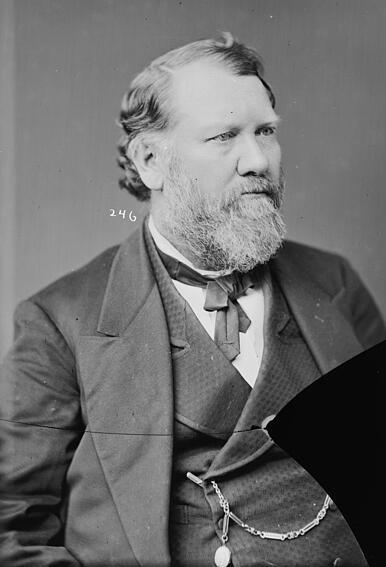
Here you will find contact information for Representative Winthrop Welles Ketchum, including email address, phone number, and mailing address.
| Name | Winthrop Welles Ketchum |
| Position | Representative |
| State | Pennsylvania |
| District | 12 |
| Party | Republican |
| Status | Former Representative |
| Term Start | December 6, 1875 |
| Term End | March 3, 1877 |
| Terms Served | 1 |
| Born | June 29, 1820 |
| Gender | Male |
| Bioguide ID | K000154 |
About Representative Winthrop Welles Ketchum
Winthrop Welles Ketcham (sometimes spelled Ketchum, June 29, 1820 – December 6, 1879) was a United States Representative from Pennsylvania and a United States district judge of the United States District Court for the Western District of Pennsylvania. He was born on June 29, 1820, in Wilkes-Barre, Luzerne County, Pennsylvania, into a region that would remain central to his personal and professional life. Raised in northeastern Pennsylvania during a period of rapid industrial and political change, he came of age in a community shaped by the early development of the anthracite coal industry and the evolving legal and political institutions of the Commonwealth.
Ketcham received his early education in local schools in Wilkes-Barre and pursued legal studies in preparation for a career at the bar. After reading law in the traditional manner of the period, he was admitted to the bar of Pennsylvania and commenced practice in Wilkes-Barre. His early legal career coincided with the expansion of the state’s transportation and extractive industries, and he built a reputation as a capable attorney within Luzerne County. His work at the bar and his engagement with public affairs led naturally into political activity at the state and local levels, where he aligned himself with the emerging Republican Party in the 1850s.
As a member of the Republican Party, Ketcham became increasingly involved in public service, reflecting the party’s rise to prominence in Pennsylvania during and after the Civil War. He held various legal and political responsibilities that helped establish him as a figure of influence in his region, and he participated in the broader debates of Reconstruction-era politics. His growing stature within the party and his legal background positioned him as a suitable candidate for national office, and he was eventually selected to stand for election to the United States House of Representatives.
Ketcham was elected as a Republican to the Forty-fourth Congress and served as a Representative from Pennsylvania in the United States Congress from March 4, 1875, to March 3, 1877. During his single term in office, he contributed to the legislative process at a time when the nation was grappling with the aftermath of the Civil War, the end of Reconstruction, and significant economic challenges, including the effects of the Panic of 1873. As a member of the House of Representatives, Winthrop Welles Ketcham participated in the democratic process and represented the interests of his Pennsylvania constituents, engaging in the consideration of legislation affecting both his district and the country at large.
After the conclusion of his term in Congress in 1877, Ketcham returned to legal and public service at the federal level. He was appointed a United States district judge of the United States District Court for the Western District of Pennsylvania, a position that recognized both his legal expertise and his prior legislative experience. In this judicial capacity, he presided over federal cases arising in a region undergoing rapid industrialization, including matters related to commerce, transportation, and labor that reflected the broader transformation of the American economy in the late nineteenth century.
Winthrop Welles Ketcham continued to serve on the federal bench until his death. He died on December 6, 1879, bringing to a close a career that had encompassed service as a practicing attorney, a member of Congress, and a United States district judge. His life and work were closely tied to Pennsylvania, particularly Wilkes-Barre and the western districts he later served judicially, and he left a record of participation in both the legislative and judicial branches of the federal government during a formative period in American history.