Representative Wooda Nicholas Carr
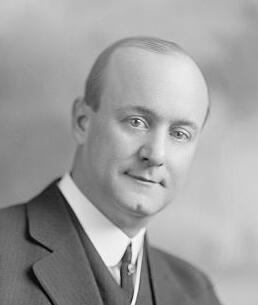
Here you will find contact information for Representative Wooda Nicholas Carr, including email address, phone number, and mailing address.
| Name | Wooda Nicholas Carr |
| Position | Representative |
| State | Pennsylvania |
| District | 23 |
| Party | Democratic |
| Status | Former Representative |
| Term Start | April 7, 1913 |
| Term End | March 3, 1915 |
| Terms Served | 1 |
| Born | February 6, 1871 |
| Gender | Male |
| Bioguide ID | C000180 |
About Representative Wooda Nicholas Carr
Wooda Nicholas Carr (February 6, 1871 – June 28, 1953) was a Democratic member of the U.S. House of Representatives from Pennsylvania who served one term in Congress from 1913 to 1915. He was born in Allegheny City, Pennsylvania (now a part of Pittsburgh, Pennsylvania), and was raised in western Pennsylvania during a period of rapid industrial growth in the region. He was the father of noted mystery novelist John Dickson Carr, who became one of the most prominent writers of detective fiction in the twentieth century.
Carr attended the public schools of his native area and pursued further studies at Madison College. He then enrolled at Monongahela College in Pennsylvania, from which he graduated in 1891. His education prepared him for both literary and legal pursuits, and he moved into professional life at a time when higher education was becoming increasingly important in the legal and political professions.
In 1892 Carr became editor of the Uniontown News and the Uniontown Democrat, newspapers published in Uniontown, Pennsylvania. His work in journalism placed him at the center of local political and civic discourse and helped establish his reputation in Fayette County. While engaged in editorial work, he studied law and was admitted to the Pennsylvania bar in 1895. He then commenced the practice of law in Uniontown. Active in party affairs, he served as a delegate to the Democratic State conventions in 1898, 1899, 1900, and 1904, reflecting his growing influence within the Democratic Party in Pennsylvania.
Carr was elected as a Democrat to the Sixty-third Congress and served as a Representative from Pennsylvania in the United States Congress from March 4, 1913, to March 3, 1915. His service in Congress occurred during a significant period in American history, early in the administration of President Woodrow Wilson, when major legislative initiatives in areas such as tariff reform, banking, and antitrust policy were under consideration. As a member of the House of Representatives, Wooda Nicholas Carr participated in the democratic process, contributed to the legislative work of the body, and represented the interests of his constituents in Pennsylvania. A member of the Democratic Party, he served one term in office and sought to advance the policies of his party during a time of progressive reform.
In 1914 Carr was an unsuccessful candidate for reelection to the Sixty-fourth Congress. After leaving Congress in 1915, he resumed the practice of law in Uniontown, returning to the legal career that had first brought him public prominence. Remaining a figure in local and regional affairs, he continued to be identified with the Democratic Party and with civic life in Fayette County.
In 1934 Carr entered federal service in a different capacity when he was appointed postmaster of Uniontown, Pennsylvania. He held that position for an extended period, serving until his retirement in 1947. His tenure as postmaster spanned the Great Depression, World War II, and the immediate postwar years, a time when the postal service played a vital role in national communication and administration. After his retirement, he continued to reside in Uniontown.
Wooda Nicholas Carr died in Uniontown, Pennsylvania, on June 28, 1953. He was interred in Oak Grove Cemetery. His career encompassed journalism, law, party leadership, congressional service, and federal administration, and his legacy also includes his role in the upbringing of his son, John Dickson Carr, whose literary achievements brought additional renown to the family name.