Senator Woodbridge Nathan Ferris
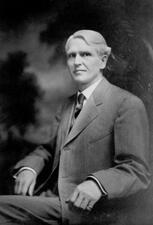
Here you will find contact information for Senator Woodbridge Nathan Ferris, including email address, phone number, and mailing address.
| Name | Woodbridge Nathan Ferris |
| Position | Senator |
| State | Michigan |
| Party | Democratic |
| Status | Former Representative |
| Term Start | December 3, 1923 |
| Term End | March 23, 1928 |
| Terms Served | 1 |
| Born | January 6, 1853 |
| Gender | Male |
| Bioguide ID | F000092 |
About Senator Woodbridge Nathan Ferris
Woodbridge Nathan Ferris (January 6, 1853 – March 23, 1928) was an American educator and Democratic politician from New York, Illinois, and Michigan who became a prominent reform-minded governor and later served as a United States Senator from Michigan. He was the 28th governor of Michigan, a United States Senator from 1923 to 1928, and the founder and namesake of Ferris State University. Over the course of a long public career, he was widely known as “The Big Rapids Schoolmaster” and, during his gubernatorial years, as the “Good Gray Governor.”
Ferris was born in a log cabin near Spencer, New York, on January 6, 1853, the first of seven children of John Ferris Jr. and Estella (Reed) Ferris. He was raised and educated in Spencer, where he attended local schools before enrolling at age fourteen in Spencer Academy. At sixteen he attended a teachers’ institute in Waverly, New York, where he received his teaching credentials. After a year of teaching, he chose to advance his own education and entered the academy in Owego, New York, laying the foundation for a lifelong commitment to pedagogy and educational reform.
From 1870 to 1873, Ferris studied at the Oswego Normal Training School (now the State University of New York at Oswego). There he came under the influence of Hermann Krusi, an instructor of drawing and geometry whose father had been chief assistant to Swiss educational reformer Johann Heinrich Pestalozzi. Krusi introduced Ferris to the Pestalozzi method of learning by hands-on application rather than abstract lecture, an approach that deeply shaped Ferris’s educational philosophy and that he would apply consistently throughout his later work as a teacher, administrator, and institutional founder. After graduating from Oswego, Ferris returned to Spencer and became principal of the village academy. He served in that role for a year before briefly enrolling in the University of Michigan Medical School from 1873 to 1874. On December 23, 1874, he married Helen Frances Gillespie, whom he had met at Oswego and who had taught at Spencer Academy while he was principal. The couple had three sons: Carleton Gillespie (1876–1961), Clifford Wendell (born and died in 1881 after about three months), and Phelps Fitch (1889–1935). Ferris again taught at Spencer Academy from 1874 to 1875, further refining his practical, student-centered teaching style.
In 1875, Ferris moved west to Illinois, where his career as an educational administrator expanded rapidly. That year he became principal of the Freeport Business College and Academy in Freeport, Illinois. In 1876 he accepted the position of principal of the Normal Department of Rock River University, and in 1877 he co-founded the Dixon Business College and Academy in Dixon, Illinois. Two years later, in 1879, he was appointed superintendent of schools in Pittsfield, Illinois, a post he held until 1884. These positions gave Ferris broad experience in both public and private education, business training, and normal-school instruction, and they reinforced his conviction that practical, vocational, and professional education should be accessible to a wide range of students.
In 1884, Ferris settled permanently in Big Rapids, Michigan, where he established the Ferris Industrial School, the institution that would evolve into Ferris State University. He served as president of the school from its founding until his death, becoming so closely identified with it that he was widely known as “The Big Rapids Schoolmaster.” He also served as president of the Big Rapids Savings Bank, reflecting his growing stature in the community. During the Panic of 1893, Ferris suffered serious financial setbacks, and the school was nearly forced to close. Several former students, however, loaned him the funds necessary to keep the institution open. The school was subsequently incorporated and capitalized at $50,000 (equivalent to nearly $2 million in 2024), and it grew into a nationally recognized institution. Over time, it developed respected departments in English, business, pharmacy, civil service, elocution, music, and college preparatory studies, embodying Ferris’s belief in broad, practical education for working men and women.
Ferris’s prominence as an educator led naturally into political activity within the Democratic Party. In 1892, he was an unsuccessful Democratic candidate for the U.S. House of Representatives from Michigan’s 11th congressional district. He ran for governor of Michigan in 1904 but was defeated by Republican Fred M. Warner. Ferris served as a delegate to the Democratic National Convention in 1908 and again in 1912, helping to shape party policy during the Progressive Era. His growing reputation as a reformer and his distinctive appearance—tall, with a full head of silver-gray hair—made him a recognizable figure in state and national politics.
In 1912, Ferris was elected the 28th governor of Michigan, becoming the first Democrat to hold the office in twenty years. He served from January 1, 1913, to January 1, 1917. His administration introduced several notable reforms, including the establishment of a farm colony for epileptics and the Central Michigan Tuberculosis Sanatorium, reflecting his concern for public health and the welfare of vulnerable populations. His tenure was also marked by the bitter Copper Country Strike of 1913–1914 in Michigan’s Upper Peninsula. As violence escalated between striking miners and a combination of strikebreakers and mine-owner supporters, Ferris deployed the Michigan National Guard to the region, where it remained for more than a year. The presence of troops led to further confrontations between strikers and the Guard, and the prolonged unrest underscored the need for a more permanent law enforcement presence in northern Michigan. In the aftermath, this experience contributed to the creation of the Michigan State Police. In 1914, Ferris was named honorary president of the First National Conference on Race Betterment, a eugenics-oriented meeting held at the Battle Creek Sanitarium; he did not attend because the copper strike was still ongoing. He continued his national political involvement as a delegate to the 1916 Democratic National Convention, and his effective leadership as governor earned him the enduring nickname “the Good Gray Governor.”
Ferris’s personal life was marked by both loss and renewed companionship during his later political career. His first wife, Helen Frances Ferris, died on March 23, 1917. In 1920, he sought to return to the governorship but was defeated by Republican Alex J. Groesbeck. On August 14, 1921, Ferris married Mary E. McCloud (1882–1954). Over the years he received several honorary degrees in recognition of his contributions to education and public service, including a master of pedagogy from Michigan State Normal College and honorary doctor of laws (LL.D.) degrees from Olivet College, the University of Michigan, and the University of Notre Dame.
In 1922, Ferris was elected as a Democrat to the United States Senate from Michigan for the term beginning March 4, 1923, and he served until his death in 1928. His tenure in the Senate thus lasted one term, from 1923 to 1928, during which he represented Michigan in a period of significant change in American society and politics. Appointed to the Committee on Education and Labor, Ferris used his long experience as an educator to advocate for national educational policy and supported the establishment of a federal Department of Education. He participated actively in the legislative process and continued to represent the interests of his Michigan constituents. In 1924, while still serving in the Senate, he was again a delegate to the Democratic National Convention and was put forward as Michigan’s “favorite son” candidate for president, receiving 30 votes on the first ballot before the nomination went to John W. Davis, who later lost the general election to President Calvin Coolidge.
In early March 1928, Ferris announced that he would not be a candidate for reelection to the Senate. Later that month, while still in office, he died in Washington, D.C., on March 23, 1928, thus becoming one of the members of the United States Congress who died in office in the first half of the twentieth century. He was interred at Highlandview Cemetery in Big Rapids, Michigan, where his first wife, Helen, and his sons Carleton and Phelps are also buried. His legacy as an educator, governor, and senator endured in Michigan and beyond, and during World War II the Liberty ship SS Woodbridge N. Ferris was named in his honor.