Representative Worthington Curtis Smith
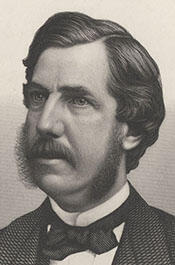
Here you will find contact information for Representative Worthington Curtis Smith, including email address, phone number, and mailing address.
| Name | Worthington Curtis Smith |
| Position | Representative |
| State | Vermont |
| District | 3 |
| Party | Republican |
| Status | Former Representative |
| Term Start | March 4, 1867 |
| Term End | March 3, 1873 |
| Terms Served | 3 |
| Born | April 23, 1823 |
| Gender | Male |
| Bioguide ID | S000641 |
About Representative Worthington Curtis Smith
Worthington Curtis Smith (April 19, 1823 – January 2, 1894) was an American politician, businessman, and railroad president who represented Vermont in the United States House of Representatives from 1867 to 1873. A member of the Republican Party, he was the son of John Smith of Vermont, who had also served as a U.S. Representative from that state, and he continued the family’s tradition of public service during a pivotal era in American history.
Smith was born in St. Albans, Franklin County, Vermont, where he was raised in a politically engaged household shaped by his father’s congressional career. He attended the common schools of St. Albans and pursued further studies at academies in Vermont and neighboring states, receiving the type of classical and commercial education typical for young men preparing for careers in business and public life in the mid-nineteenth century. His early exposure to both commerce and politics helped prepare him for a career that would span manufacturing, railroads, and national legislative service.
Before entering national politics, Smith established himself in business and industry. He became involved in iron manufacturing and related enterprises, reflecting the broader industrial development of New England in the decades before and after the Civil War. His business interests and managerial experience eventually led him into the railroad sector, where he rose to prominence as a railroad president. In that capacity he participated in the expansion and management of regional rail lines that were critical to Vermont’s economic growth, the movement of goods, and the integration of local markets into the broader national economy.
Smith’s political career at the national level began after the Civil War, when he was elected as a Republican to the United States House of Representatives. He served three consecutive terms in Congress, from March 4, 1867, to March 3, 1873, representing Vermont during the Reconstruction period. As a member of the House of Representatives, Worthington Curtis Smith participated in the democratic process and represented the interests of his constituents at a time when the nation was grappling with the aftermath of the Civil War, the reintegration of the Southern states, and the transformation of the federal government’s role in civil rights and economic development. During his six years in office, he contributed to the legislative process in keeping with Republican priorities of the era, which included support for Union veterans, economic modernization, and the consolidation of the gains of the Union victory.
Smith’s service in Congress occurred during a significant period in American history, and his background in business and railroads informed his perspective on issues related to infrastructure, commerce, and national development. While in the House, he was part of the Republican majority that shaped Reconstruction policy and oversaw legislation affecting the rapidly industrializing economy. He worked to ensure that the needs and concerns of Vermonters—particularly in agriculture, trade, and transportation—were reflected in federal policy, and he maintained close ties to his home state throughout his tenure.
After leaving Congress in 1873, Smith returned to his business pursuits in Vermont, resuming and expanding his involvement in railroad management and other commercial enterprises. His post-congressional years were marked by continued engagement in the economic life of his region, where his experience as both a legislator and a railroad executive positioned him as an influential figure in local and state affairs, even though he no longer held national office. He remained a respected member of the Republican Party and of the broader Vermont community.
Worthington Curtis Smith died on January 2, 1894, in St. Albans, Vermont, the town where he had been born and where he had spent much of his life. His career as an iron manufacturer, railroad president, and three-term Republican member of the U.S. House of Representatives from Vermont reflected both the industrial and political currents of nineteenth-century America, and he is remembered as part of a family lineage that contributed significantly to Vermont’s representation in Congress.