Representative Zebulon Weaver
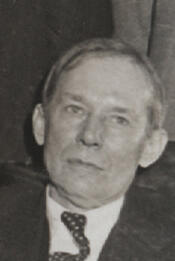
Here you will find contact information for Representative Zebulon Weaver, including email address, phone number, and mailing address.
| Name | Zebulon Weaver |
| Position | Representative |
| State | North Carolina |
| District | 12 |
| Party | Democratic |
| Status | Former Representative |
| Term Start | April 2, 1917 |
| Term End | January 3, 1947 |
| Terms Served | 14 |
| Born | May 12, 1872 |
| Gender | Male |
| Bioguide ID | W000230 |
About Representative Zebulon Weaver
Zebulon Weaver (May 12, 1872 – October 29, 1948) was an American lawyer and Democratic politician who served 14 terms as a U.S. Representative from North Carolina between 1917 and 1929 and again between 1931 and 1947. His long tenure in the House of Representatives, spanning three decades, placed him at the center of major developments in American history, and he contributed to the legislative process during 14 terms in office as a member of the Democratic Party.
Weaver was born in Weaverville, Buncombe County, North Carolina, a town founded by his grandfather, Montraville Weaver. He was also the great-grandson of John Weaver, a Dutch-born settler who was the first European to settle in the Reems Creek valley. Raised in western North Carolina, he attended the local public schools and then Weaver College in his hometown. He subsequently enrolled at the University of North Carolina at Chapel Hill, where he studied law in preparation for a legal and political career.
After completing his legal studies, Weaver was admitted to the bar in 1894 and began practicing law in Asheville, North Carolina. Establishing himself as a lawyer in the growing city, he built a professional reputation that soon led him into public life. His legal practice in Asheville remained an important part of his career, both before and after his years in Congress, and provided the foundation for his later public service.
Weaver entered elective office in the early twentieth century. He was elected to the North Carolina House of Representatives in 1906 and again in 1908, representing his region in the state legislature. In 1912 he advanced to the North Carolina Senate, where he served a single term. During these years in the General Assembly he gained legislative experience and visibility within the Democratic Party, positioning himself for a bid for national office. His early campaigns also intersected with the emerging political careers of others; for example, Gertrude Dills McKee—who would later become the first female member of the North Carolina State Senate—supported his reelection efforts in 1928, marking her first experience in politics.
Weaver was elected to the U.S. House of Representatives from North Carolina’s 10th congressional district in 1916, beginning his long congressional service in 1917. The initial election was extremely close; he was first declared the winner by only eight votes over Republican James J. Britt. Britt contested the result, arguing that 90 ballots in which voters submitted a party ballot but did not mark the box on it should not have been counted. A majority of the House committee reviewing the contest sided with Weaver, but when the matter reached the House floor, the chamber, in an unusual move, adopted the minority resolution and declared that Weaver had not been elected, ordering that Britt be sworn in instead. Because the 65th Congress was closely divided—with the Democratic coalition holding only a narrow majority—and many members were absent, the final resolution passed by a vote of 185 to 183. The contest took so long to resolve that Britt was seated for only the last three days of the 65th Congress, from March 1 to March 3, 1919.
Despite this setback, Weaver was subsequently elected to four more consecutive Congresses, serving continuously until he was defeated for reelection in 1928 by Republican George M. Pritchard. He returned to private life briefly, but in 1930 he recaptured his seat and resumed service in the U.S. House on March 4, 1931. He then served eight additional terms, remaining in Congress until January 3, 1947. In total, Zebulon Weaver served as a Representative from North Carolina in the United States Congress from 1917 to 1947, participating in the democratic process and representing the interests of his constituents through World War I, the interwar period, the Great Depression, the New Deal era, and World War II. During his tenure in office, he was responsible for the bill that resulted in the creation of the Great Smoky Mountains National Park, a major conservation and economic development achievement for his region and the nation.
Weaver’s long congressional career ended when he lost a bid for renomination in 1946, concluding his service in the 79th Congress. After leaving the House, he returned to Asheville, North Carolina, where he resumed the practice of law. Outside of his public office, he was active in civic and fraternal life and was a member of the Knights of Pythias. His family also maintained a tradition of public service; his son, Zebulon V. Weaver, was appointed in 1929 as one of the original 27 patrolmen of the North Carolina Highway Patrol. The younger Weaver served in that capacity until about 1931, when he resigned to further his education and later became a successful lawyer.
In his later years, Weaver continued to live in Asheville, remaining engaged in his legal work and community affairs. He died there on October 29, 1948, closing a life that linked the local history of western North Carolina with the national legislative history of the United States through his three decades in Congress.